Solo or team cleaning: which works best for property managers?
Choose team cleaning for large properties or tight turnovers, solo for studios. Learn how to decide based on time, SOPs, and photo proof.

Jonathan Lalinec
Use a cleaning team for properties with three or more bedrooms, peak-turnover periods, and gaps of under 90 minutes between reservations. Keep a solo cleaner for studios, one-bedroom apartments, and standard turnovers. The deciding factor is always the time available between checkout and check-in, provided that choice is backed by documented SOPs, systematic photo proof, and automated job scheduling.
In brief:
- Team cleaning is recommended for properties with three or more bedrooms and when there is less than 90 minutes between reservations, to protect quality and speed.
- Property size, the available window, and the size of your portfolio should guide the choice between team and solo, with a team preferred whenever the gap between checkout and check-in is very tight or the property is large.
- Automating jobs through checklists, geographic zones, and timestamped photo proof is essential to keep things running smoothly, whatever cleaning mode you choose.
- A cleaner can generally handle three to four properties per day, and it is advisable to have one backup cleaner per zone to cover any unplanned absence.
- Onboarding a new cleaner should include a paid trial clean with a checklist, timing, and photo review, to limit turnover and improve quality.
Table of contents
- Solo or team cleaning: pros and cons compared
- What concrete criteria should guide the choice between team and solo?
- How to automate jobs, zones, checklists, and photo proof
- Daily capacity and backup cover: what to plan for each cleaner
- How to assess a new cleaner with a trial clean
- Which KPIs to track to fine-tune team or solo decisions
- How CleanClac supports automated solo and team cleaning
- Common mistakes when choosing between team and solo
- Automate your cleans with CleanClac
- Sources
- Frequently asked questions
Solo or team cleaning: pros and cons compared
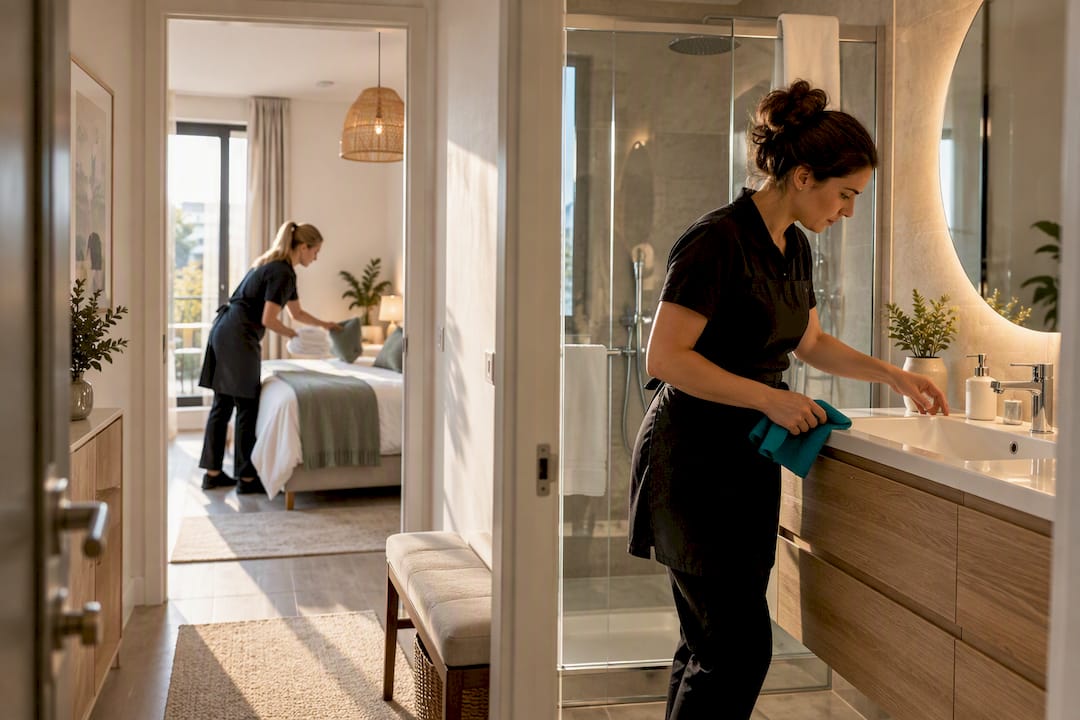
The choice between team and solo cleaning depends mainly on property size and scheduling pressure. A two-person team can cut execution time in half on larger properties, which protects tight windows typical of peak season. The trade-off is a higher cost per job and extra coordination between the two cleaners.
Solo cleaning, on the other hand, remains the most cost-effective approach for a studio or standard one-bedroom, with only one person to schedule and pay. Its weak point: if that person is absent or running late, there is no one to step in on the spot.
- Team cleaning: ideal for family homes, same-day turnovers, and properties with a pool or garden to maintain on top of the interior clean.
- Solo cleaning: suited to studios, one-bedroom apartments, and schedules with more than two hours between reservations.
- Mixed approach: a multi-property manager often combines both, depending on which property type is assigned each day.
What concrete criteria should guide the choice between team and solo?
Three variables are enough to settle most cases: property size, available time, and cost weighed against the risk of a bad guest review.
- Property size. Beyond two bedrooms or 70 m², a team significantly reduces the risk of delays, especially when the clean includes linen, a full kitchen, and an outdoor area.
- The available window. When less than 90 minutes separates checkout from the next check-in, a solo cleaner rarely has time to cover everything without rushing the final inspection.
- Your portfolio size. A portfolio of more than 10 to 15 properties makes automation more cost-effective than a rushed hire, whether solo or team.
- Cost versus risk. A team costs more per hour, but a bad review tied to a rushed clean often costs far more than an extra hour of labour.
A simple rule to remember: if the window divided by the number of rooms is very short, consider team cleaning. Otherwise, solo is generally sufficient and less expensive.
How to automate jobs, zones, checklists, and photo proof
Efficient cleaning management rests on four technical building blocks, whether you choose team or solo. Without them, even the best crew will eventually fall behind.
- Automatic job creation: every confirmed reservation on Airbnb, Booking.com, or Vrbo should generate a cleaning job and notify the assigned cleaner without any manual step.
- SOPs and checklists by property type: a studio does not have the same checklist as a home with a pool. The checklist must be attached to the job, not sent separately, as shown by this checklist example from the hospitality sector.
- Geographic zones: grouping properties by area reduces travel time and allows the same cleaner to cover several jobs in one day without unnecessary detours.
- Timestamped photo proof: require 4 to 5 mandatory shots (bathroom, kitchen, made bed, entrance, living room) before a job can be signed off.
This structure applies equally to a dedicated Airbnb cleaning app or a manual system, but automation removes the notification fatigue that causes cleaner completion rates to drop.
Pro tip: Set a clear visual acceptance standard for each photo (made bed, clear floor, dry bathroom) before signing off a job. A cleaner who knows exactly what is expected sends better photos, whether working solo or as part of a team.
Daily capacity and backup cover: what to plan for each cleaner
A cleaner in a property management setup typically handles three to four properties per day, based on typical scheduling loads observed in concierge operations. Beyond that, the risk of delays rises sharply, especially in peak season when windows shrink.
Portfolio size dictates the actions to take:
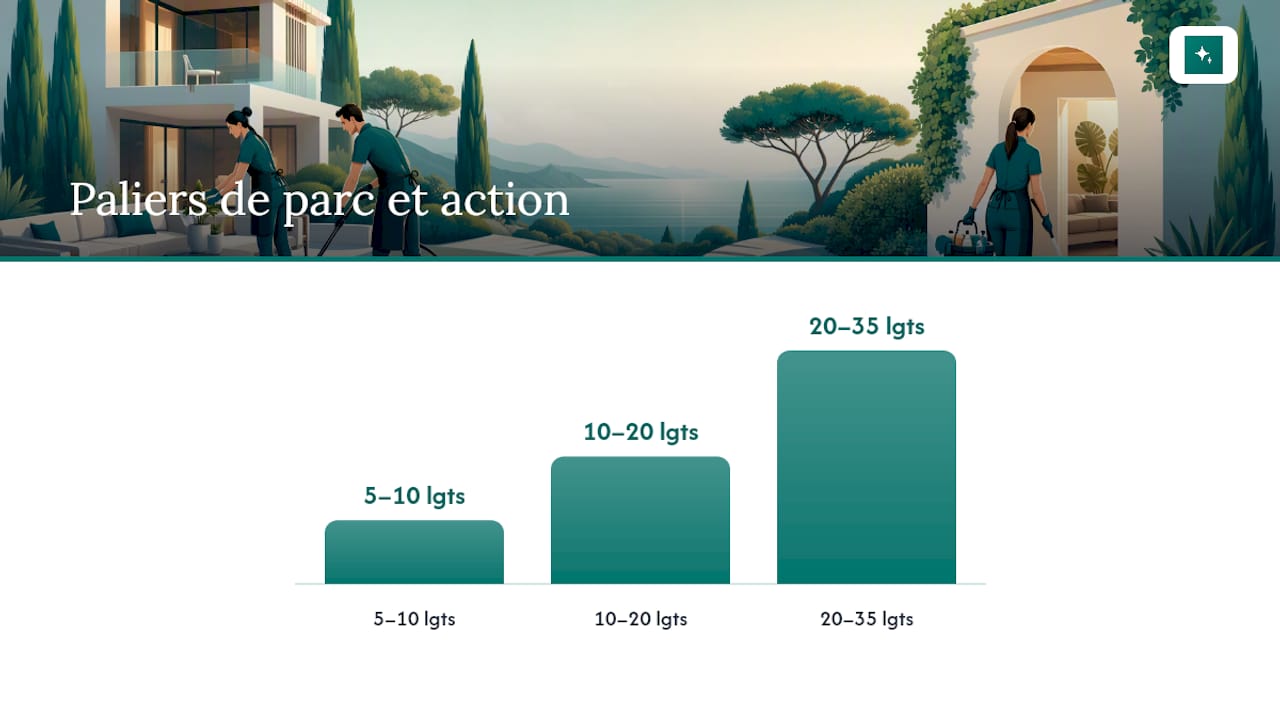
- 5 to 10 properties: automating job creation is enough, with one or two solo cleaners.
- 10 to 20 properties: start introducing team cleaning for larger properties and consolidate notifications to avoid overload.
- 20 to 35 properties: hiring a cleaning coordinator and systematising SOPs significantly reduces incidents and the time the manager spends troubleshooting.
A named backup cleaner per zone is not a comfort option. It is the only safeguard against a last-minute cancellation that leaves a property dirty when the next guest arrives. A directory of local cleaning companies makes it easy to build that reserve before you need it.
How to assess a new cleaner with a trial clean
A paid trial clean remains the best filter before permanently onboarding a cleaner, whether solo or as part of a team.
- Give them a complete checklist, identical to the one used in production.
- Time the actual work and compare it to the standard window for that property type.
- Check the quality of the photos submitted and how clearly they communicate when something is wrong.
This kind of trial is a quick investment that reduces turnover and costly hiring mistakes.
Pro tip: Log the trial time even when a cleaner ticks every box on the checklist. A cleaner who is too slow on a simple studio will not keep up with a portfolio of 15 properties.
Which KPIs to track to fine-tune team or solo decisions
Four indicators are enough to guide the decision month by month: job completion rate, response time to notifications, cancellation rate on the cleaners' side, and the correlation between the assigned cleaner and the cleanliness scores left by guests.
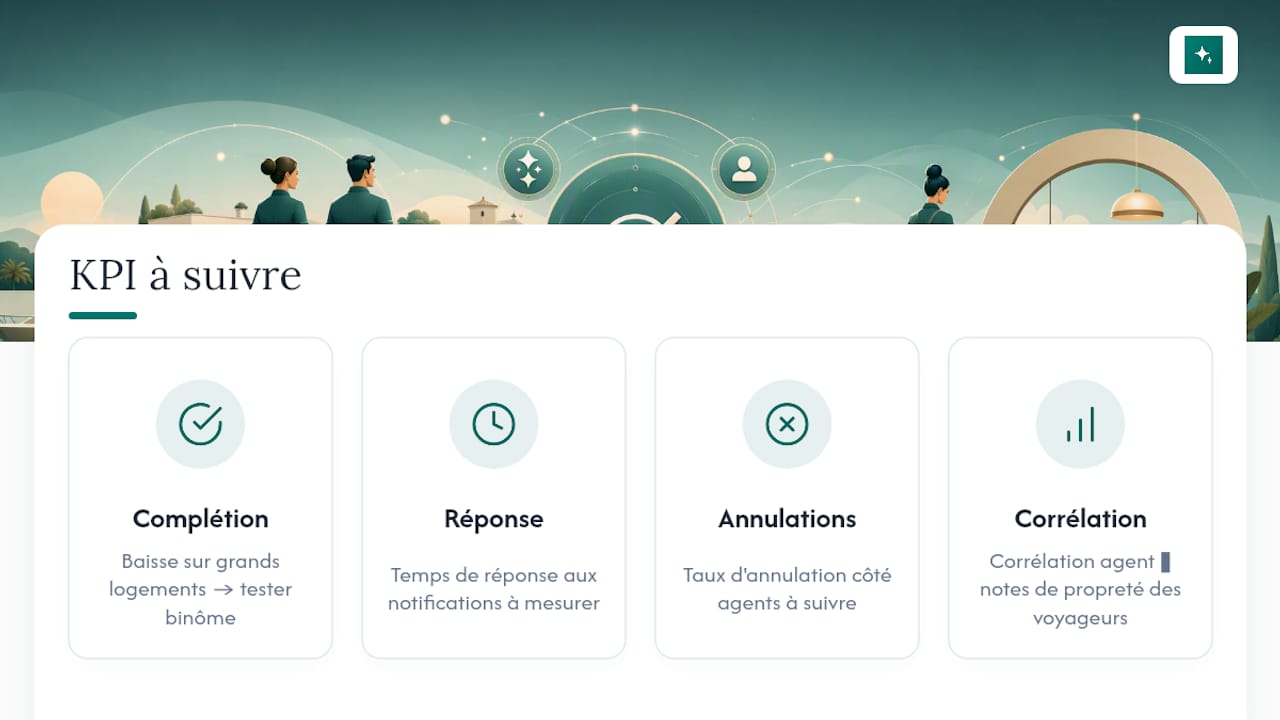
A weekly review works well in peak season; monthly is enough the rest of the year. As soon as a solo cleaner's completion rate drops on larger properties, that is the signal to trial team cleaning on that specific batch before rolling the change out across the whole portfolio.
How CleanClac supports automated solo and team cleaning
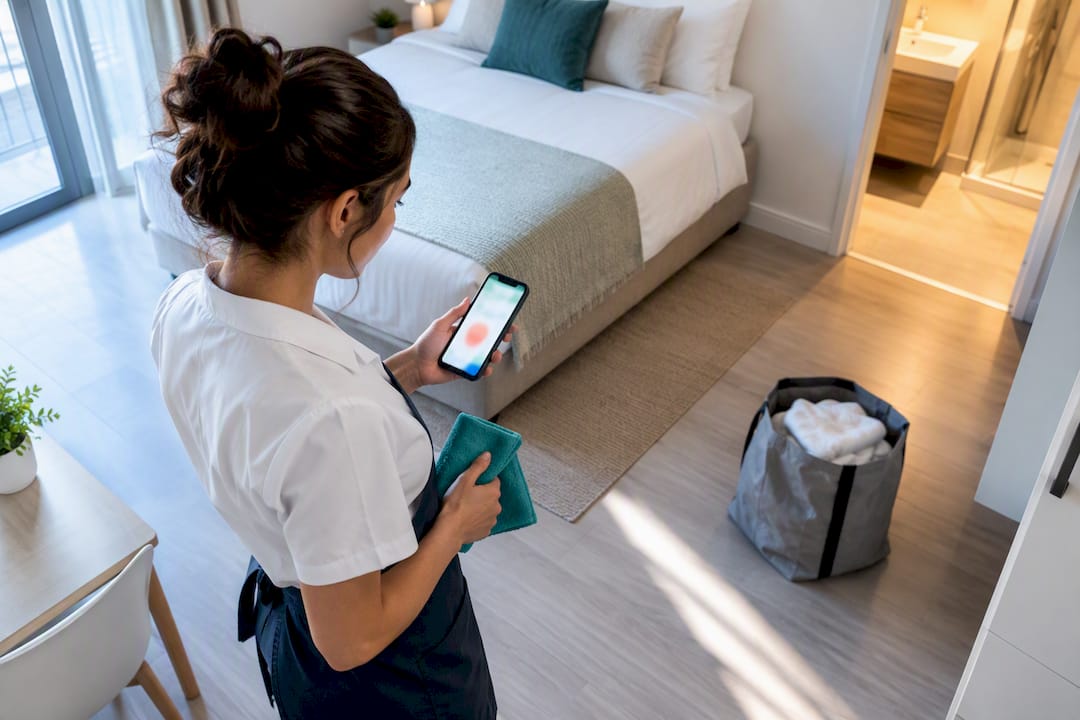
CleanClac automates job creation the moment a reservation is confirmed on Airbnb, Booking.com, or Vrbo, and notifies the assigned cleaner directly on their phone. Each cleaner has their own mobile access, with checklists and timestamped photo capture built into the job. Real-time dashboards let you track performance by cleaner and quickly spot when a second person or a replacement is needed.
Common mistakes when choosing between team and solo
Many managers hire a second cleaner before they have even automated their notifications and checklists. That is the wrong order: build the system first, then scale the team. Another classic mistake is having no backup cleaner by zone, which turns the first absence into a crisis. Before switching to team cleaning across the board, test it on five or six representative properties rather than the whole portfolio at once.
, Jonathan
Automate your cleans with CleanClac
CleanClac is the alternative to manual cleaning schedule management for property managers juggling multiple properties and multiple cleaners. Unlike a spreadsheet or a messaging thread, the app creates the job as soon as a reservation is confirmed, notifies the cleaner on their phone, and automatically collects the timestamped photos that prove the clean was done properly.
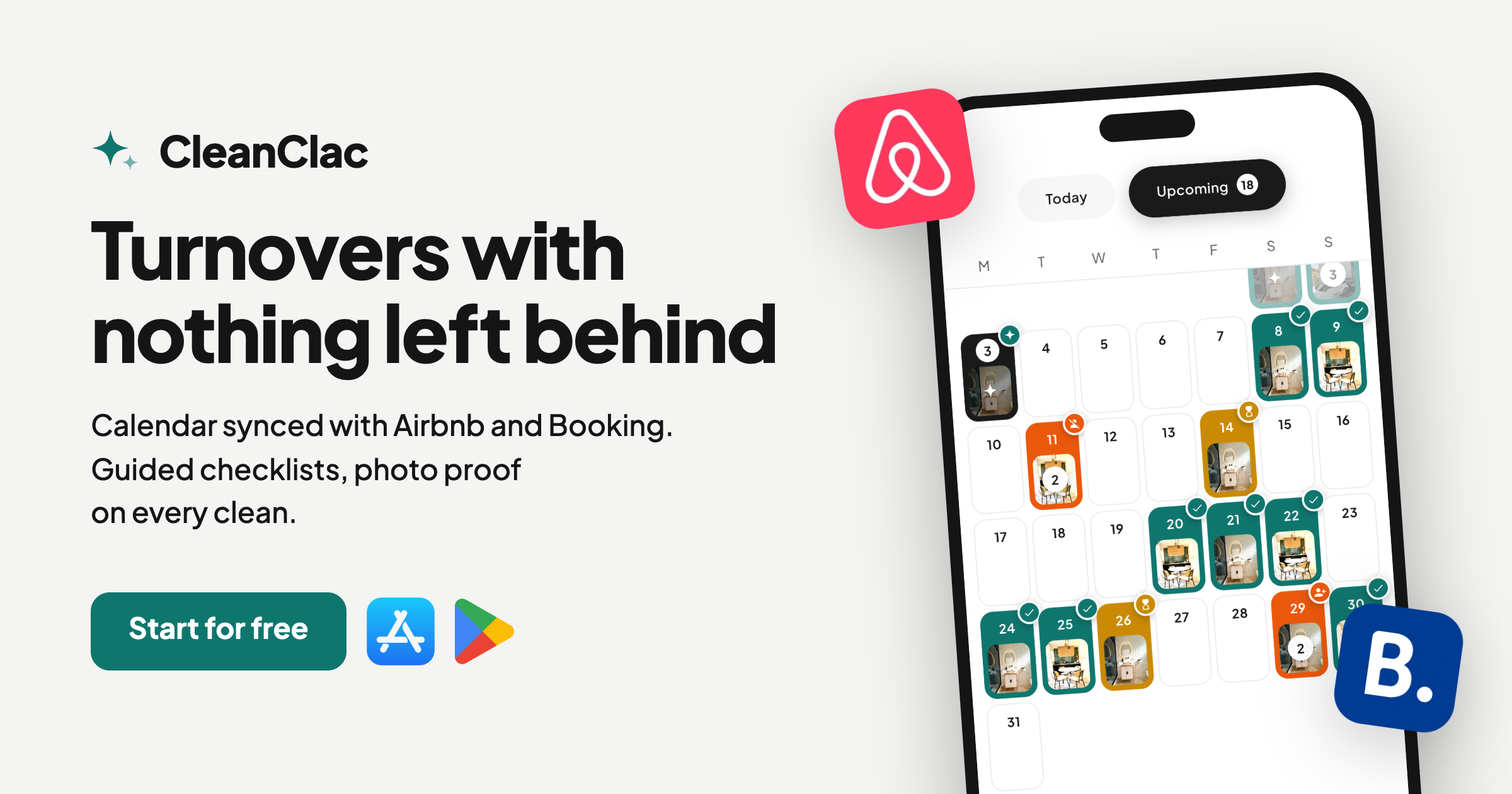
Whether you manage two properties or a mixed portfolio of twenty using both solo and team cleaning, the pricing tiers scale with the number of active properties, starting at €9.99 per month for two properties. Cleaners also have their own app to view their schedule and submit photo proof without a phone call or text message. Try the Free plan to evaluate the automation on your first property before rolling it out across your full portfolio.
Sources
- Short-term rental housekeeping: how to set up a consistent cleaning operation (2026) | Hostfully
- Managing a concierge service: processes, tools and scheduling | Tweelo
- Short-term rental cleaning team (2026) | Nowistay
- Concierge cleaning: scheduling and rates 2026 · Tweelo
Frequently asked questions
Should you always use a cleaning team for larger properties?
Not always: beyond two bedrooms or when the gap between reservations is under 90 minutes, a team reduces the risk of delays, but a studio or one-bedroom is generally more cost-effective with a solo cleaner.
How much does software cost to automate solo or team cleaning?
At CleanClac, the plan for two properties starts at €9.99 per month, with tiers up to €19.99 per month for five properties and €4 per month for each additional property.
How many properties can a cleaner handle per day?
A cleaner in a property management setup handles an average of three to four properties per day, based on typical scheduling loads observed in concierge operations. Beyond that, the risk of delays increases significantly.
What is a trial clean and why should you plan one?
It is a paid assignment given to a new cleaner before permanent onboarding, with a checklist and timing, which helps reduce turnover and costly hiring mistakes.
What photos should you require to sign off on a clean?
Four to five shots are generally enough: bathroom, kitchen, made bed, entrance and living room. This practice is recommended to spot issues quickly before the next guest arrives.