5 Steps to Stabilise Your Airbnb Cleanliness Rating
A 5-step protocol, ready-to-use checklist, and timestamped photos to stabilise your Airbnb cleanliness rating. Learn how to automate the whole process.

Jonathan Lalinec
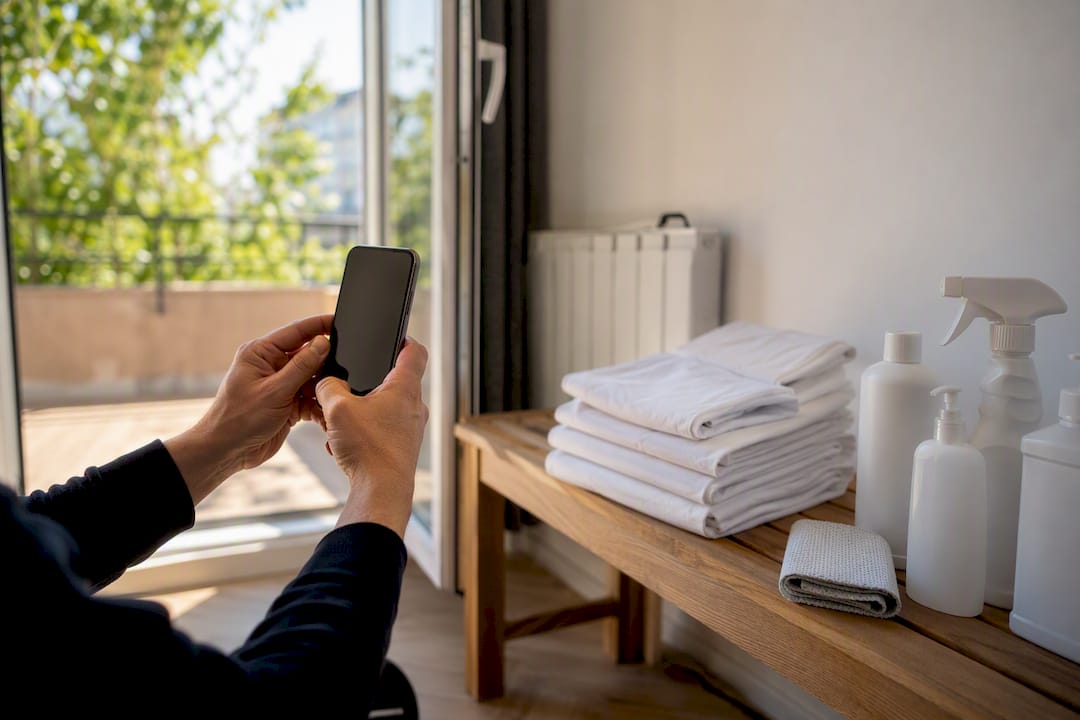
The most effective way to improve your cleanliness rating for good is to apply a standardised turnover protocol combined with systematic timestamped photo checks. This combination eliminates variability between cleaners and provides evidence in the event of a dispute. A tool like CleanClac lets you automate this rigour without it taking over your evenings.
In brief:
- Putting a standardised turnover protocol in place with timestamped photo checks ensures consistent cleanliness and reduces variability between cleaners.
- Thorough cleaning, including checking and photographing key areas, limits rating losses caused by the micro-details that most affect guest perception.
- Automating cleaning management with software like CleanClac reduces errors, optimises scheduling and makes it easier to provide evidence in the event of a dispute or a low rating.
- Keeping micro-irritants under control, such as dust or visible marks, relies on quick checks before guest arrival using torches and smell tests.
- Investing in structured organisation and automation tools delivers lasting service-quality improvements across multiple properties and platforms.
Table of contents
- Why cleanliness affects your rating, visibility and revenue
- Detailed turnover checklist and 5-step protocol
- Micro-irritants: the details that sink a rating
- Organising and scaling cleaning management across multiple properties
- Quality control and evidence: timestamped photos, criteria and recleans
- What to do after a low cleanliness rating
- How a tool like CleanClac makes cleanliness reliable
- Practical priorities: what to do today, this week, this quarter
- Automating your Airbnb cleaning with CleanClac
- Useful resources to go further
- Sources
- Frequently asked questions
Why cleanliness affects your rating, visibility and revenue
Cleanliness is not just one criterion among many on Airbnb. It is often the one that tips a booking into a negative review. Airbnb has awarded the "enhanced cleaning" label to more than one million listings, proof that the platform monitors this criterion closely and factors it into its search algorithm.
By the numbers: the vast majority of cleanliness ratings on Airbnb are 4 or 5 stars, according to aggregate data published by the platform. Falling below that threshold places you immediately in a visible minority: the one that attracts bad reviews and loses ranking.
The mechanism is simple to understand but rarely anticipated. A cleanliness rating that drops pulls down the overall rating, which in turn reduces your position in search results. Less visibility means fewer bookings and therefore less revenue. Cleaning is frequently cited as the leading cause of negative reviews in short-term rentals, ahead of noise or equipment. A host who keeps their cleanliness rating close to 5 stars can generally charge higher rates than their direct competitors, simply because guests pay a premium for the certainty of not walking into a questionable bathroom.
Detailed turnover checklist and 5-step protocol
A successful clean always follows the same logic, whether you do it yourself or use an outside cleaner. The five-step protocol below is a proven method in the property management sector for guaranteeing consistent cleanliness from one stay to the next.
- Prepare: air the property for ten minutes, remove dirty linen and rubbish, gather all supplies before you start.
- Clean: dust from top to bottom, mop floors last, degrease kitchen surfaces.
- Disinfect: apply disinfectant to handles, switches, remote controls and taps.
- Check: go through every room with the checklist and photograph the key areas.
- Reset: put out fresh linen, replace decorative items, set the heating or air conditioning for arrival.
Here are the critical points to never skip, room by room:
- Bedroom and bed: linen changed for every stay, pillows straightened, under the bed checked (10 minutes).
- Bathroom: grout and taps free of limescale, towels folded, bin emptied, mirror streak-free (15 to 20 minutes).
- Kitchen: oven and hob degreased, dishes put away, fridge checked, bin taken out (15 minutes).
- Floors: vacuumed then mopped, corners and under furniture included (10 to 15 minutes).
- Touch points: door handles, remote controls, switches and taps disinfected (5 minutes).
For equipment, use separate microfibre cloths for each area (one set for the kitchen, another for the bathroom) to avoid cross-contamination. Keep a limescale test or a simple white-vinegar check ready for wet areas before you leave. A one-bedroom property takes an average of 45 minutes to 1 hour 15 minutes for a full, compliant clean, excluding linen laundered off-site.
Micro-irritants: the details that sink a rating
It is almost never the major oversights that cost a star. It is the microscopic details a guest spots in ten seconds: the ones Airbnb itself defines as signs of a previous stay, such as a hair on a pillow, dust on a windowsill, or poorly dried dishes in a cupboard.
The issues most often responsible for a lower rating:
- Hair on bedding, rugs or in the shower.
- Limescale on taps and shower panels.
- Fingerprints on glass surfaces and screens.
- Dust built up on skirting boards, picture frames and the tops of wardrobes.
- Residual smells of smoke, pets or poor ventilation.
These micro-details appear in negative reviews far more than structural defects, because they are visible the moment a guest arrives, before they have even put down their bags.
Three quick checks are enough to catch them before your guests do: run a torch along surfaces at a low angle to reveal dust invisible to the naked eye, systematically check room corners and the underside of furniture, and do a smell test by walking into the property with the windows closed for ten minutes.
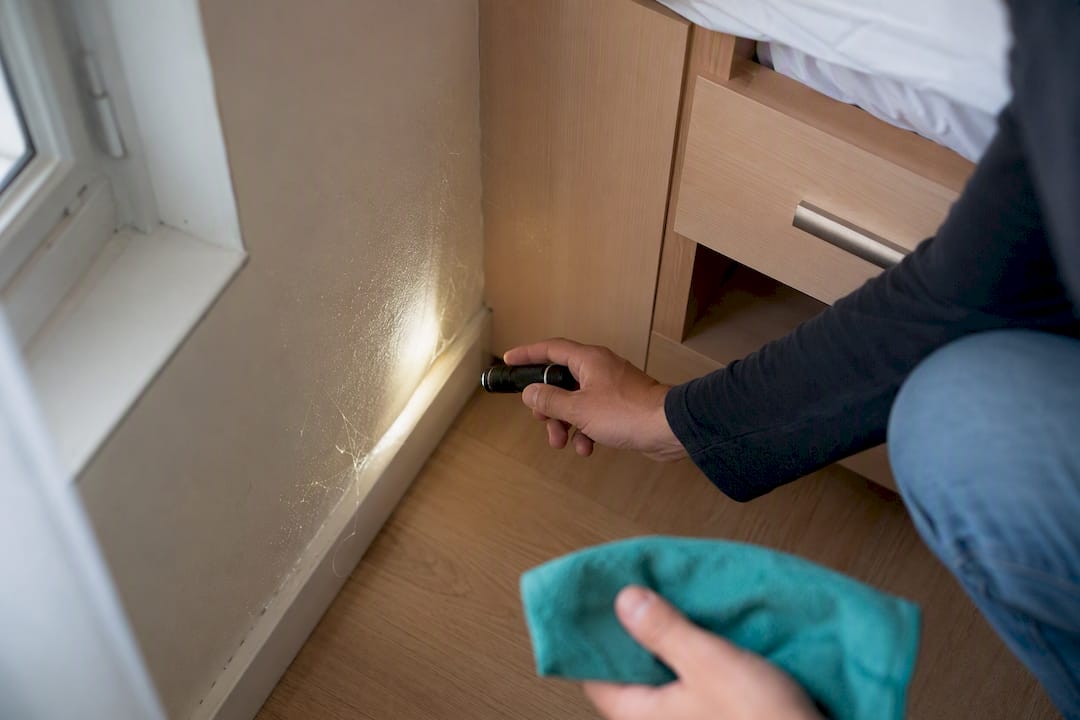
Pro tip: Train your cleaners to always finish with a "door closed, lights on" check in every room. That is the angle at which the human eye picks up the most dust and marks, and it is exactly the angle your guest will adopt when they walk in.
Organising and scaling cleaning management across multiple properties
Managing a single property by hand is still workable with a paper checklist. Managing three, five or ten properties without a structured process becomes an almost guaranteed source of errors, especially when bookings come in from several channels at the same time.
Treating cleaning as an ongoing process rather than a one-off task mechanically reduces quality variability, whatever the number of properties managed. In practice, this requires four pillars:
- Automated scheduling linked to bookings, with a minimum buffer of two to three hours between checkout and check-in to absorb delays.
- Assignment based on complexity: a studio does not demand the same time as a six-bedroom house, and assignments must reflect that.
- Formalised back-up plans: a replacement cleaner identified in advance and an agreement with a professional laundry to absorb peak periods.
- Stock alert thresholds: cleaning products, spare linen and consumables (coffee, soap) tracked with a minimum level that triggers an automatic order.
For last-minute emergencies, it is better to have already identified a local platform of available cleaners than to scramble the evening before a guest arrives. Managers running multiple properties also benefit from setting an internal response time (SLA) for recleans: a cleaner notified of a defect should be back within two hours at most if the guest is arriving the same day.
Quality control and evidence: timestamped photos, criteria and recleans
A timestamped photo is not an administrative gimmick. It has become a differentiating factor in disputes, and it also reassures guests who receive visual confirmation before they arrive. A professional protocol with a standardised checklist and photo evidence enables fast recleans and protects the host if a claim is disputed.
Areas to photograph systematically, with automatic timestamping:
- The made bed, shot straight on and at three-quarter angle.
- The bathroom, including taps and floor.
- The kitchen, including the worktop and the inside of the oven.
- Critical touch points flagged during a previous incident.
The sign-off procedure should stay simple: each photo is compared against a reference standard for the listing, and any non-conformity automatically triggers a reclean before the check-in time. Every recorded incident (missing product, untreated stain) feeds a history that makes it possible to identify repeat-problem cleaners or properties. Some management tools automate this tracking directly.
What to do after a low cleanliness rating
A low rating stings, but how you respond to it matters almost as much as the clean itself. Here is the order to follow:
- Check your internal evidence. Review the timestamped checklist and photos from the stay in question to establish whether the reported issue was real or not at the point the cleaning team left.
- Offer a reclean if the evidence is insufficient or the defect is confirmed. A quick gesture (a discount or a credit) often defuses an escalating situation.
- Respond publicly with empathy, acknowledging the problem without a defensive tone, then continue the conversation by private message to find a concrete solution.
- Ask Airbnb to revise the review only if you have solid evidence (timestamped photos, signed checklist) showing that the reported issue does not reflect the actual condition of the property at check-in.
That last step only works if you already have the history to hand. Without evidence, a revision request is almost always rejected.
How a tool like CleanClac makes cleanliness reliable
Automation does not replace the clean: it prevents the oversights that cost stars. An app like CleanClac syncs the cleaning schedule directly with Airbnb, Booking.com or Vrbo bookings, sends an automatic notification to the assigned cleaner and centralises timestamped photo reports that can be viewed from a smartphone. Each cleaner has their own access, with no manual coordination by text or spreadsheet.
Stock tracking for consumables and a per-property performance dashboard make it easy to spot a cleaner or a property accumulating incidents. For a gradual rollout, start with one or two properties before extending the tool to your full portfolio.
Practical priorities: what to do today, this week, this quarter
When faced with a list of best practices, the temptation is to try to implement everything on the same day. That is a mistake: prioritisation matters more than completeness.
Starting today, print or post the turnover checklist and begin systematically photographing the bed, bathroom and kitchen after every clean. Also build up a spare linen buffer to absorb an unexpected laundry problem without having to cancel a reclean.
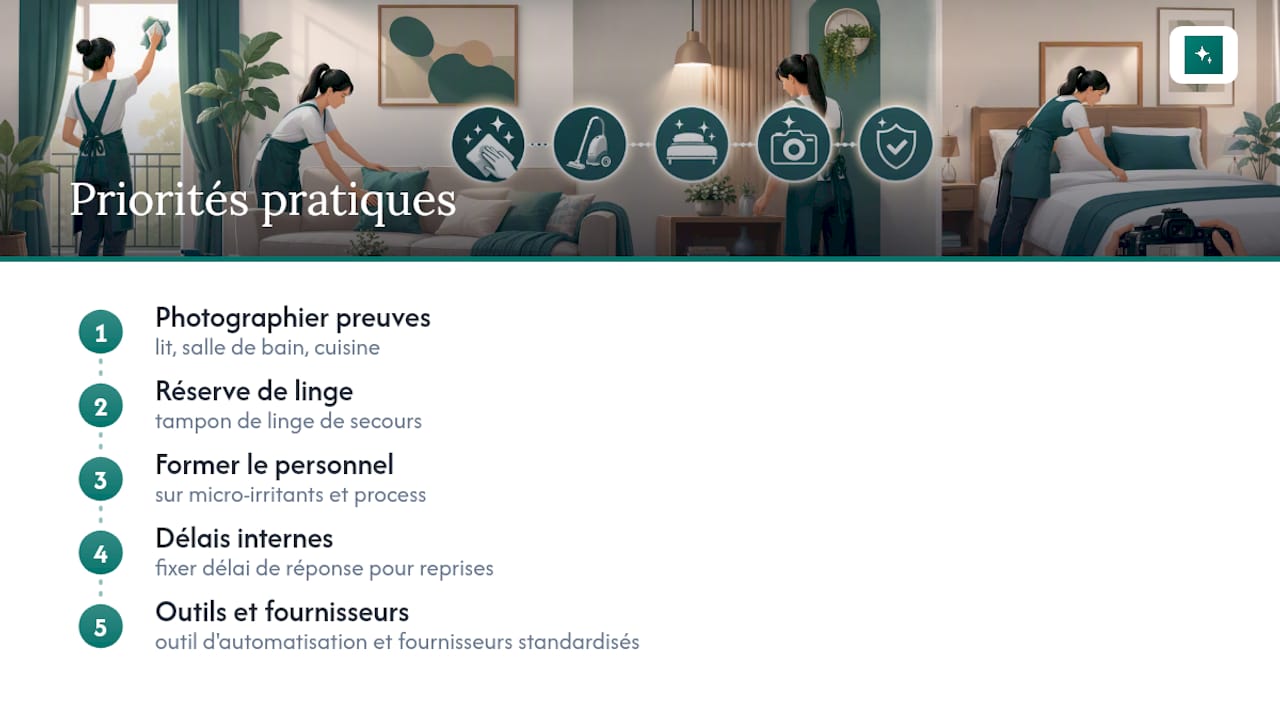
This week, schedule training for your cleaners on micro-irritants and set an internal response time for recleans. Negotiate a back-up agreement with a laundry or identify a replacement cleaner in advance.
This quarter, invest in a management tool that automates scheduling and photo evidence, and standardise your cleaning product suppliers to guarantee consistent quality across all your properties. That is the natural order: first the rigour that costs nothing, then the organisation, then the tool that locks it all in for the long term.
Automating your Airbnb cleaning with CleanClac
CleanClac is the solution that replaces the notebook, the spreadsheet and the scattered message threads with a single system: a schedule generated automatically from your bookings, individual mobile access for each cleaner, and a timestamped photo report for every clean.
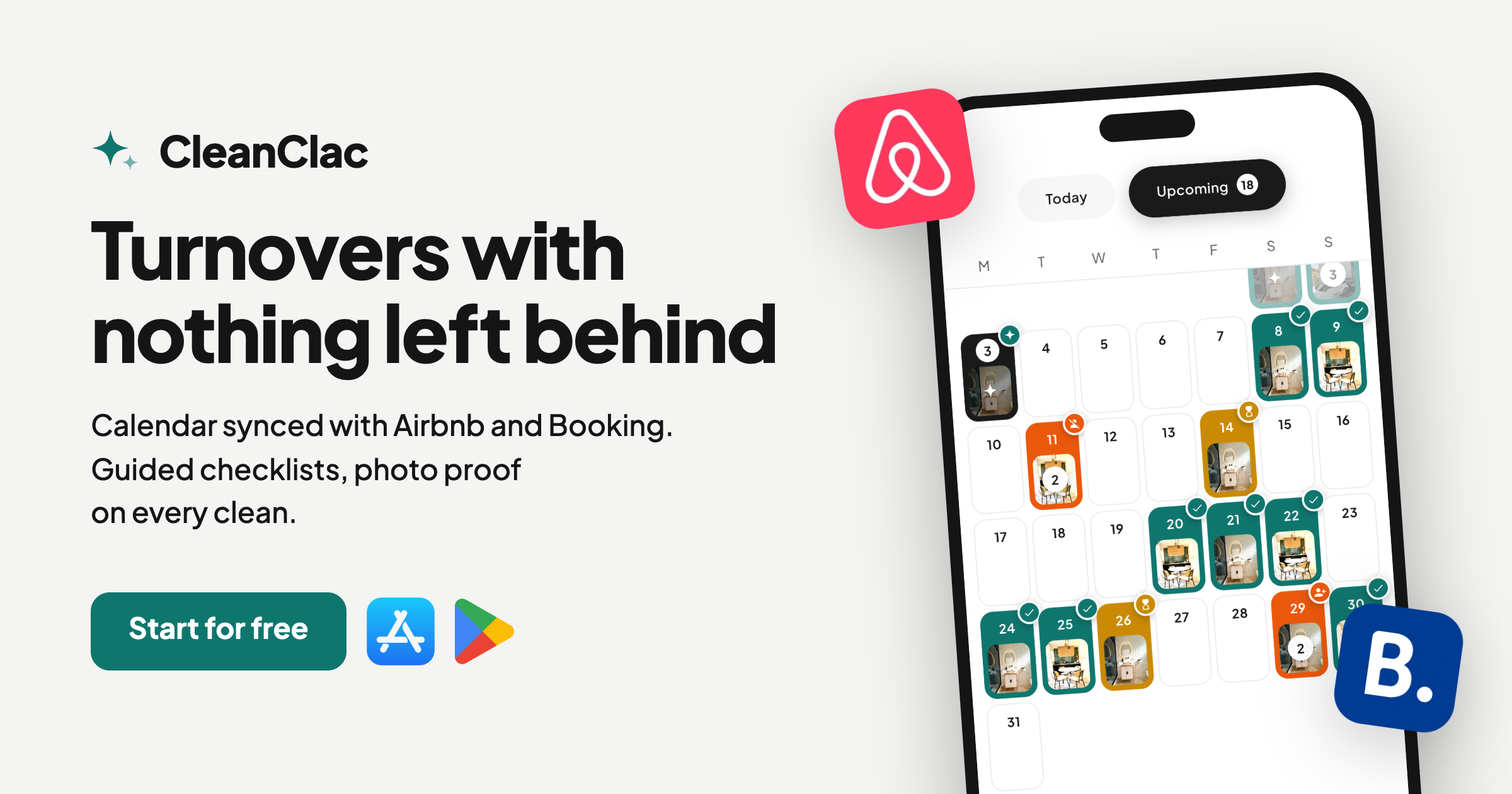
In practice, that means less time spent coordinating teams, fewer recleans caused by avoidable oversights, and consistent cleaning quality even when you manage several properties across multiple platforms. Stock tracking alerts you before you run out of soap or coffee, and the performance dashboard shows you at a glance which property or cleaner needs your attention. To assess the cost based on the number of properties you manage, see the CleanClac pricing page, which scales with the number of active listings. You can try the solution on one property before rolling it out across your full portfolio.
Useful resources to go further
For the official guidelines, the Airbnb page on cleanliness standards sets out precisely what the platform considers a defect. The full guide to Airbnb cleaning management and the article on how to guarantee guest satisfaction complement this foundation well. For a deep clean between longer tenancies, the end-of-tenancy cleaning guide offers a method that transfers easily. On the tools side, the Airbnb cleaning software comparison helps you choose based on your property volume.
Sources
- More than 1 million listings have earned the enhanced cleaning label
- Airbnb: cleanliness guidelines
- Why cleaning quality affects your ratings and revenue
- How to carry out an impeccable Airbnb clean
Frequently asked questions
What is a good cleanliness rating on Airbnb?
A good cleanliness rating is 5 stars. The vast majority of reviews on the platform already reach 4 or 5 stars, which means any rating below that threshold stands out very negatively.
What is the recommended cleaning protocol for Airbnb?
The five-step protocol, prepare, clean, disinfect, check, reset, is the industry-standard method for guaranteeing consistent cleanliness between every stay.
How do you get a bad review removed on Airbnb?
Airbnb will only agree to revise a review if you provide concrete evidence, a timestamped checklist and photos, showing that the reported issue does not reflect the actual condition of the property when the guest arrived.
Can a tool like CleanClac really improve my cleanliness rating?
CleanClac does not clean for you, but it eliminates the scheduling and follow-up oversights that cause most failed cleans, by centralising photos, reports and task assignments on mobile.


