Early Guest Checkout: Reassign Cleaning Without Losing Time
Guest leaving early? In 30 minutes, inspect the property, take timestamped photos, and reassign your cleaner to turn the rental around fast.

Jonathan Lalinec
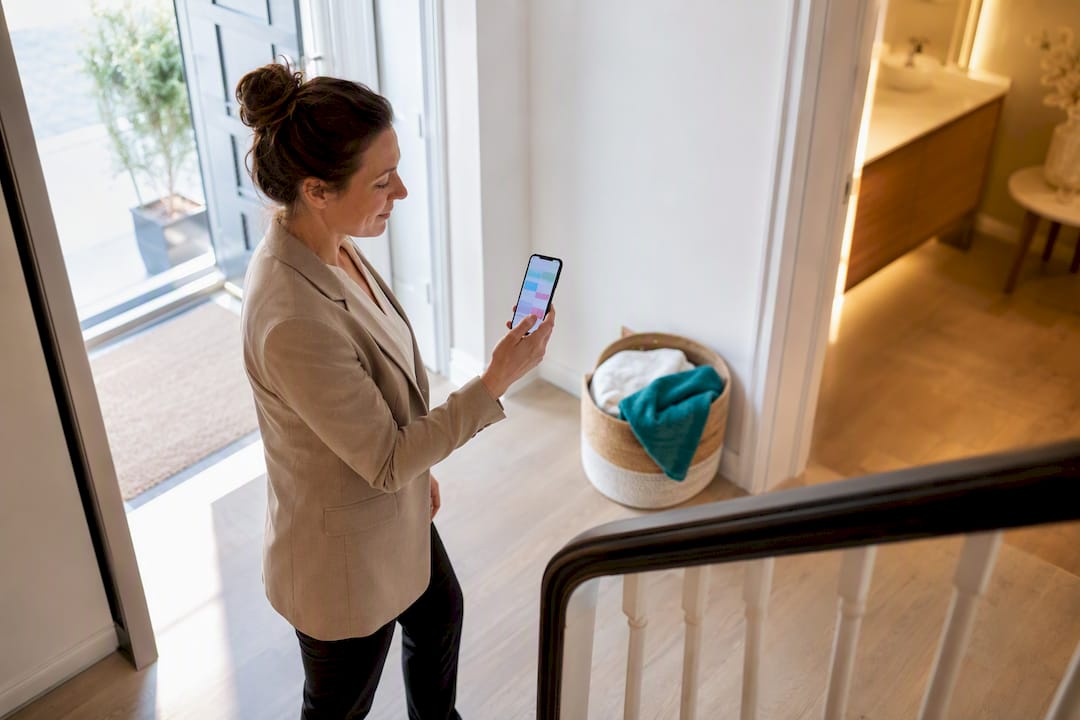
The moment a guest leaves earlier than planned, inspect the property quickly, photograph every room, notify your cleaning team through your central channel, and reassign the job without delay. The top priority is to establish the actual time the property will be ready, so you can adjust the day's schedule and, if needed, push the next check-in back slightly.
In brief:
- An early guest checkout requires a quick property inspection, timestamped photos, and immediate notification of your cleaning staff.
- Managing a flexible schedule lets you turn a tight turnover into a comfortable one by reassigning the clean quickly when the window allows.
- Clear communication with both the guest and the cleaning team cuts out unnecessary back-and-forth and resolves the situation in a single exchange.
- Automating task reassignment with modern tools slashes coordination time, often to just a few minutes.
- Cleaning fees cannot be increased unless damage is proven with evidence, as standard fees already cover the clean between two stays.
Table of contents
- What to do in the 30 minutes after an early guest checkout
- How to reorganize your cleaning schedule after an early checkout
- What to say to the guest and the cleaning team
- How to limit the impact of early checkouts on your business
- Fees, deductions and goodwill gestures: what can you charge?
- An unexpected gap can become a preventive maintenance window
- Automating cleaning reassignment with Cleanclac
- Sources
- Frequently asked questions
What to do in the 30 minutes after an early guest checkout
An early guest checkout often opens an unexpected window, but if you handle it poorly it becomes a source of stress rather than a time saver. How you use that first half-hour shapes the rest of the day.
Here is the sequence to follow as soon as the checkout is confirmed:
- Inspect the property room by room: check security (doors, windows, electrical appliances), unusual smells, and any visible damage to furniture or linen.
- Take timestamped photos of the entrance, living room, kitchen, bathroom, and every unmade bed. This room-by-room checklist, paired with a documented final inspection, remains a key practice for maintaining consistent quality between turnovers.
- Notify the cleaning provider with at least three pieces of information: the property address, the condition you found, and the actual time window available.
- Decide on the next step: start the clean immediately, offer the next guest a luggage storage option, or push the following check-in back slightly.
Do not try to handle everything yourself in a panic. The checklist must stay short and actionable, otherwise it simply stops being followed.
Pro tip: Keep a pre-saved photo checklist template on your phone with five fixed shots, always in the same order. This cuts documentation time to under two minutes and makes it easy to compare conditions between turnovers.

How to reorganize your cleaning schedule after an early checkout
An early guest checkout does not just change the departure time. It reshuffles every priority for your team that day. The central question becomes: who can get there, how quickly, and with how much margin before the next arrival?
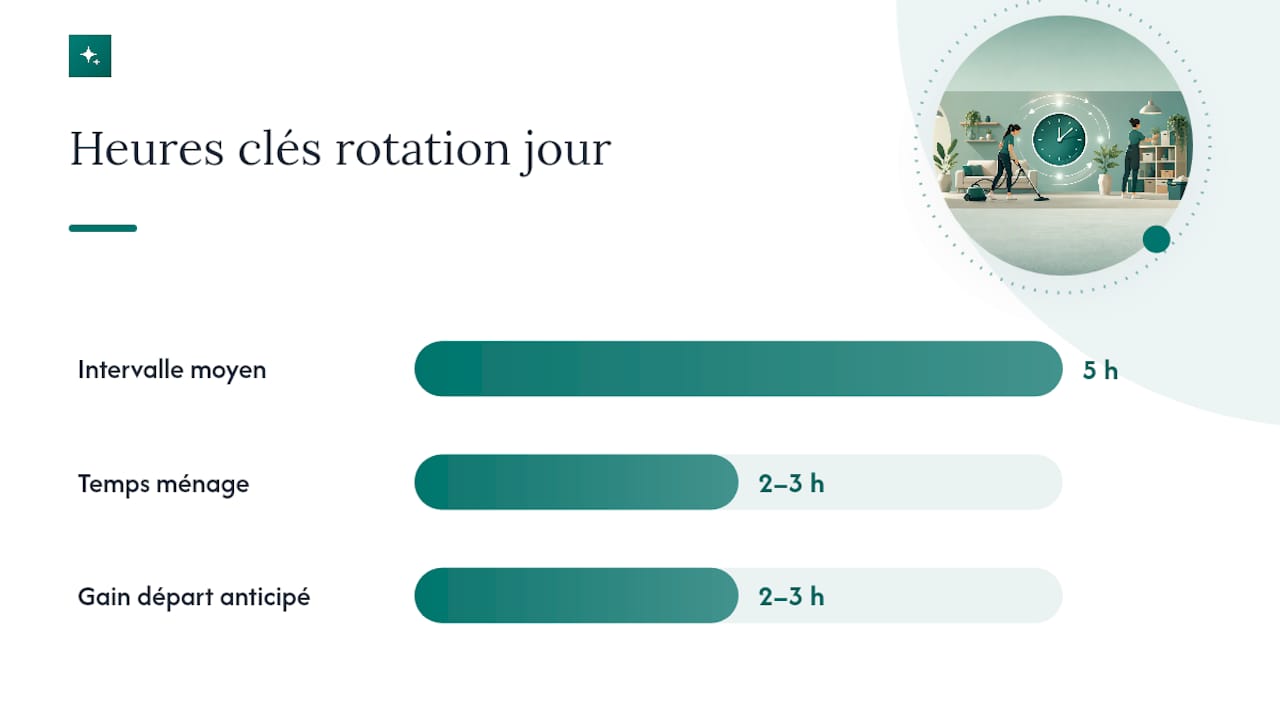
A typical same-day turnover schedule leaves around five hours between checkout and the next check-in, and cleaning a one-bedroom apartment takes an average of 2 to 3 hours. An early departure of two or three hours can therefore turn a tight turnaround into a comfortable one, as long as you act quickly.
An effective assignment process generally follows this logic:
- A targeted notification sent to the cleaner normally assigned to that property.
- A short response window of fifteen to thirty minutes maximum.
- Automatic escalation to a backup cleaner if no reply arrives within that window.
- A final confirmation sent to the property manager once the job is accepted.
Having a backup cleaner identified in advance is critical here. Without a fallback solution, every early checkout turns into an improvised round of phone calls. Cleaning companies managing multiple properties are better off maintaining a formal list of available backup cleaners by area, rather than discovering there is no solution at the worst possible moment.
Integrating these steps into a PMS or operations tool changes everything in practice. The notification goes out automatically as soon as the booking status changes, with no manual action required from the manager. That is precisely what separates a property management company that absorbs unexpected events from one that is overwhelmed by them.
What to say to the guest and the cleaning team
How you communicate shapes the outcome of an early checkout just as much as what you do. A poorly worded message creates unnecessary back-and-forth. A clear script resolves the situation in a single exchange.
For the guest announcing an early departure:
- Confirm the actual departure time and, if needed, ask for a photo of the keys left behind or the door locked.
- Avoid piling on instructions. Every additional request increases the chance it will be ignored, and cleaning is the cleaner's responsibility, not the guest's.
For the cleaning team:
- Send a standardized notification with three clear options: accept, decline, or propose an alternative slot.
- Build in an automatic escalation if no reply arrives within the set window, with a direct call to the backup cleaner.
If the next guest needs to wait, offer a concrete alternative: luggage storage, waiting in a shared area, or a partial discount as a goodwill gesture if the delay runs significantly over the planned check-in time.
How to limit the impact of early checkouts on your business
The best response to an early guest checkout is usually one that was prepared weeks in advance. Three levers underpin solid prevention: process, automation, and operational slack.
On the process side, a few simple habits prevent bottlenecks:
- A standardized cleaning checklist applied consistently, not just in emergencies.
- Control photos taken at the end of every job, not only during random inspections.
- A spare set of linen for each property, so a tight turnaround never stalls because of insufficient sheet stock.
- A buffer stock of cleaning supplies, so you never depend on a last-minute reorder.
On the automation side, automatic notifications and routing to the first available cleaner replace improvised group chats far more reliably. An automated workflow that detects the request, routes the task, and confirms with the guest can cut processing time to just a few minutes, whereas a manual exchange often takes half an hour or more.
The coordination time saved by an automatic notification adds up to tens of minutes per incident. Across a portfolio of several properties, that gain accumulates fast.
A dedicated app puts this logic into practice: each cleaner receives their job directly on their phone, with photo reporting and stock tracking built into every visit, removing the need for repeated calls when something unexpected happens.
Fees, deductions and goodwill gestures: what can you charge?
Understanding the rules around additional charges before a dispute arises is essential. Airbnb states that cleaning fees cover the normal clean between two stays. You cannot charge for a task the platform already considers included in those fees.
- A paid express clean is only justified when the window is extremely short and requires an unplanned additional cleaner or an extra journey.
- A damage deduction only applies with dated photo evidence and an objective assessment, never on a vague impression.
- When in doubt, a goodwill gesture such as a small discount or partial night credit usually protects your rating better than a disputed claim.
An unexpected gap can become a preventive maintenance window
An early checkout frees up time that most managers waste by waiting. I see it as an opportunity to slip in a small repair, update the checklist after each incident, and use the accumulated photos to train new recruits more quickly.
, Jonathan
Automating cleaning reassignment with Cleanclac
An early guest checkout should never turn your day into a string of improvised phone calls. Automating reassignment means that as soon as a booking changes status, the job goes straight to the available cleaner, with photo reporting and stock tracking built into every visit.

In practice, cleaners have mobile access, which cuts manual exchanges between the manager and the team and makes every visit fully traceable with photo evidence. For a multi-property manager who regularly faces early checkouts, that coordination saving adds up significantly over time. If you manage several properties on Airbnb, Booking.com, or Vrbo, find out how the Cleanclac cleaning management app works and test automatic reassignment on your next unexpected event.
Sources
For further reading: the official Airbnb rules on cleaning fees, detailed timing and schedule benchmarks from Tweelo and Hostfully, and workflow automation guidance from Nowistay.
- Airbnb · Help: cleaning fees
- Airbnb checkout process for property managers · Tweelo
- Airbnb cleaning: the turnover guide · La Paume Digitale
- Early check-in and late checkout at scale · Nowistay
Frequently asked questions
What should you do first when a guest checks out early?
Inspect the property immediately, take timestamped photos of every room, then notify your cleaning team to reassign the job as quickly as possible.
How long does a standard turnover clean take?
A turnover clean typically takes between one and three hours depending on the size of the property, with around five hours available between checkout and check-in in a standard schedule.
Can you charge extra fees after an early checkout?
No, unless damage is documented with dated photo evidence. Cleaning fees already cover the normal clean between two stays; an early checkout does not justify additional charges.
How do you automate cleaning team notifications?
A dedicated tool automatically sends the job to the available cleaner as soon as the booking status changes, with a photo report included, removing the need for repeated manual messages.
Should you inform the next guest if cleaning is running late?
Yes. Offer a luggage storage option or a revised check-in time estimate rather than leaving the guest without information. This significantly reduces the risk of a negative review.


