Recurring Cleaning Defects: Stop Losing Stars
Eliminate recurring cleaning defects like odors, stained linen, and mold by enforcing a digital photo checklist before every guest check-in.

Jonathan Lalinec
The recurring cleaning defects that cost the most stars are always the same: persistent odors, stained linen, mold in bathrooms, signs of pests. Every visible defect left unaddressed mechanically lowers your rating, and cleanliness remains the leading cause of guest dissatisfaction. The action to take today: enforce a digital checklist with mandatory photo inspection before every check-in.
In brief:
- Most recurring cleaning defects involve key areas such as the kitchen, bathroom, and bedding, where visible mistakes cause a significant drop in ratings.
- The root cause of these repeated defects lies in poor processes: badly synchronized scheduling, incomplete or poorly followed checklists, and a lack of a reporting culture.
- An effective turnover checklist must include timestamped photo evidence covering grout lines, floors, linen, and appliances, to better detect and correct errors.
- Team training must focus on standardized procedures, rigorous supply management, and regular quality checks to ensure consistent results.
- Digital tools that automate booking synchronization, with mobile tracking and photo documentation, durably reduce defects and improve cleaning traceability.
Table of contents
- What are the recurring cleaning defects by area of the property?
- Why do these cleaning problems repeat from one property to the next?
- How do you build a turnover checklist that actually eliminates defects?
- What corrective actions and training do cleaning teams need?
- Which KPIs should you track to durably reduce cleaning defects?
- On-the-ground experience confirms what the numbers show
- How do you handle guest feedback on cleanliness and complaints?
- Does eco-friendly cleaning actually reduce recurring defects?
- What the numbers really reveal about recurring defects
- Cleanclac turns your checklist into a system that misses nothing
- Sources
- Frequently asked questions
What are the recurring cleaning defects by area of the property?
A recurring cleaning defect is never an isolated incident. It is a cleanliness problem or a neglected task that repeats, property after property, because no one has fixed the root cause. An analysis covering several hundred thousand incidents reported in short-term rentals identified the most problematic areas: the kitchen, bathroom, and bedding top the list, followed by outdoor hot tubs and barbecues, which are regularly left until the end of the checklist and forgotten.
Here are the specific signs to look for in each area:
- Kitchen: food residue left in the refrigerator, dishes that were poorly dried and smell, grease marks on the extractor hood and hob.
- Bathroom: grout lines blackened with mold, slow-draining sinks indicating limescale buildup, soap residue on taps.
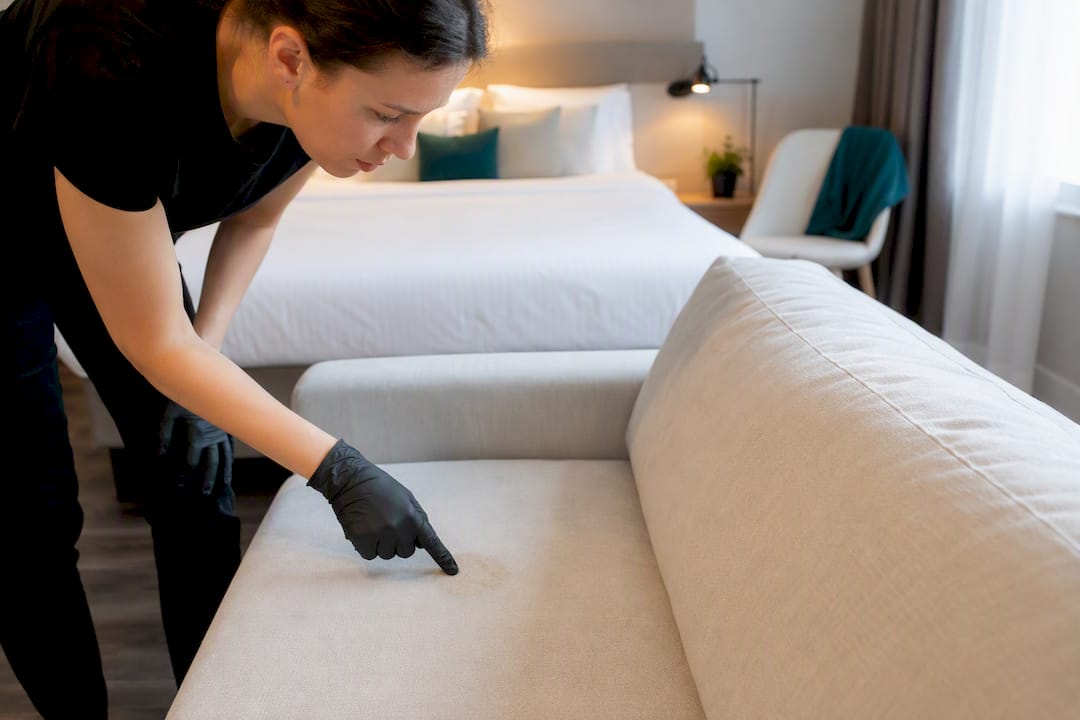
- Bedding and linen: stains invisible to the eye but felt to the touch, hair on pillowcases, pillows left flat and never plumped.
- Floors and under furniture: dust under beds, crumbs in corners, sticky floors near high-traffic areas.
- Outdoor areas and equipment: dirty barbecue grill, empty gas cylinder left unreported, terrace furniture left in disarray.
These defects share one thing in common: they escape a quick glance. A rushed cleaner lets them slide, and that is exactly where your rating takes the hit. An untreated linen stain leads to a two-star review or lower in a significant share of cases.
Why do these cleaning problems repeat from one property to the next?
A one-off defect can be explained. A defect that comes back with every turnover points to a process problem, not a people problem. Four causes appear consistently in portfolios that keep making the same cleaning mistakes:
- Poorly synchronized scheduling: a late checkout followed by a tight check-in turns a full clean into a race against the clock, and the harder areas (oven, grout, under furniture) are the first to get skipped.
- Incomplete or paper-based checklists: without a timestamped digital record, no one knows who checked what, or when. Accountability dissolves and the defect comes back next time.
- No reporting culture: a cleaner who has no incentive to flag a small problem (a blown bulb, a cracked grout line) will let it go rather than spend time on a task outside their brief.
- Maintenance kept separate from cleaning: waiting for a guest complaint to fix a grout line or change a filter turns a minor repair into a costly emergency.
Pro tip: always ask your cleaners to photograph any sign of wear, however minor, during the clean. This one habit changes everything: it lets you schedule a repair before the defect becomes visible to the next guest.
How do you build a turnover checklist that actually eliminates defects?
An effective checklist does more than list tasks. It documents their completion with photo evidence, which fundamentally changes the reliability of each turnover. In practice, every clean should verify:
- under beds and sofas, the most commonly missed area;
- shower grout and drains, recurring mold hotspots;
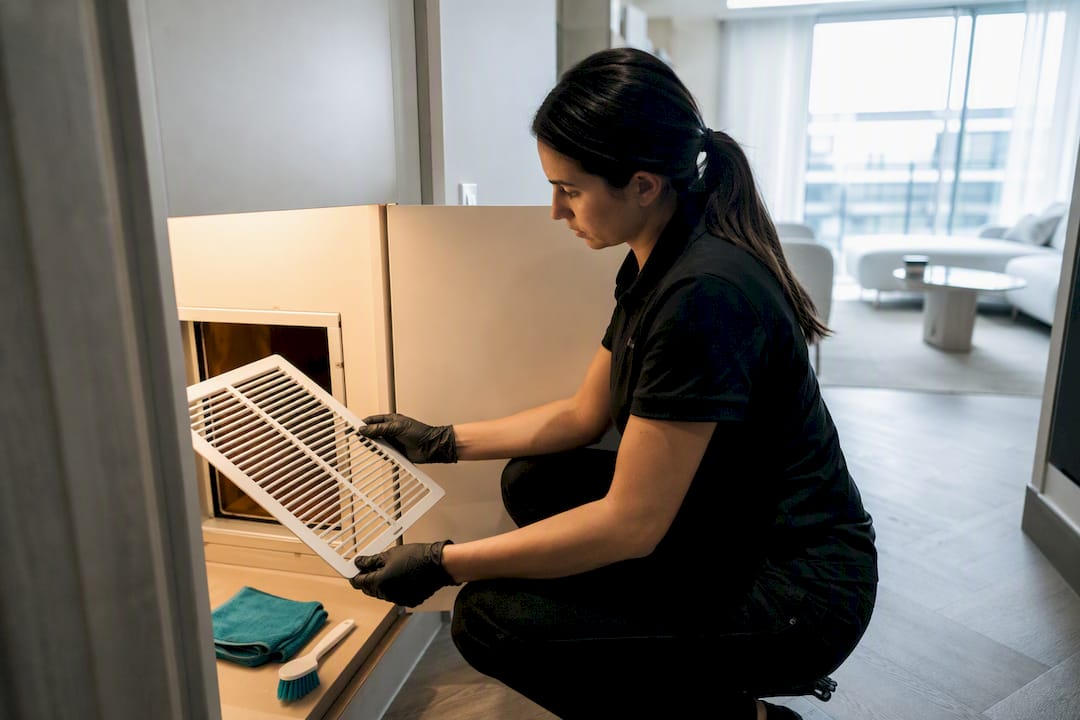
- the inside of the refrigerator and extractor hood filters;
- the condition of linen (stains, odors) before folding;
- supply levels (toilet paper, coffee, welcome products).
For photo evidence, set a standard method: the same angles every time, automatic timestamping, centralized storage accessible to the property manager. Remote photo verification catches around 87% of the errors an in-person inspection would find, versus 98% for a full physical walkthrough. The 11-point gap justifies reserving in-person inspection for high-stakes properties (high nightly rate, VIP guests, recent complaints) and letting photos handle routine volume.
Also define a clear escalation rule: beyond a certain threshold (a visible stain on a light-colored sofa, a reported odor, a broken appliance), the property manager must be alerted before check-in, not after the guest arrives. This alignment between scheduling and inspection avoids last-minute re-cleans, which are typically charged at an emergency rate and poorly prepared.
What corrective actions and training do cleaning teams need?
Fixing a one-off defect is not enough if the team does not know how to repeat the correct action at the next turnover. Structure the skills-building in four steps:
- Quick-treatment procedures: a written protocol for stain removal (product, dwell time, rinsing), odor neutralization (cross-ventilation, bicarbonate of soda on fabrics), and eliminating surface mold before it sets into grout lines.
- Structured onboarding: an induction session covering risk areas, the photo method, and escalation thresholds, followed by short refreshers every quarter.
- Random quality checks: spot-checking a sample of properties, with an individual score per cleaner, to catch gaps before they become a trend.
- Supply management and a safety stock: a minimum inventory (spare linen, cleaning products, light bulbs) ensures that a depleted supply never becomes a cleaning defect by default.
Close to 40% of property managers say they struggle to find reliable cleaning staff. In this tight recruitment market, structured training carries more weight than ever: it turns a new cleaner into a reliable professional faster than learning on the job alone.
Which KPIs should you track to durably reduce cleaning defects?
A recurring defect you do not measure stays invisible until the next complaint. Four indicators are enough to drive real improvement:
| Indicator | What it measures | Recommended target |
|---|---|---|
| Turnover failure rate | % of cleans requiring a re-clean | Under 5% (versus an industry average of around 12.5%) |
| Photo inspection pass rate | % of photo submissions validated without re-clean | Rising consistently over time |
| Average resolution time | Time from defect reported to defect corrected | As short as possible before the next check-in |
| Cleanliness-related complaints | % of guest reviews mentioning a cleanliness defect | Falling quarter on quarter |
This data is collected through digital forms, timestamped photos, and scheduling logs. The point is not to produce another report: it is to prioritize corrective action and plan preventive maintenance before the failure rate climbs again.
On-the-ground experience confirms what the numbers show
In practice, property managers who durably reduce recurring defects share one trait: they synchronize their cleaning schedule with bookings rather than managing the two separately. A tool like Cleanclac automates this synchronization with Airbnb, Booking, and other platforms, giving each cleaner individual mobile access to track their assignments without manual coordination.
Supply tracking also matters more than most people realize: an unexpectedly depleted stock of linen or cleaning products causes a cleaning defect just as surely as a poorly executed task. Integrating preventive maintenance into the routine, rather than treating it as a separate concern, noticeably reduces costly emergencies and the negative reviews that follow.
How do you handle guest feedback on cleanliness and complaints?
A cleanliness complaint must be handled differently from a simple negative review: it calls for a fast response and a verifiable corrective action, not just an apology. As soon as a complaint comes in, acknowledge it within the hour if possible, with a concrete proposal (a goodwill gesture, an immediate re-clean if the guest is still on the property).
Log every complaint systematically in the same system as your photo inspections. This lets you check whether the reported defect corresponds to an area already flagged as a weak spot in that property, or whether it is a one-off incident. A defect that recurs three times in the same property is no longer a coincidence: it is a signal that the cleaning process itself needs to change, not just the symptom corrected.
Respond publicly to the review, even a negative one, showing the corrective action taken. A prospective guest who reads a specific response ("we revised the bathroom checklist and added a photo check of the grout lines") is far more reassured than by silence or a generic formula. Keep a record of resolution times: a cleaning defect resolved within 24 hours before the next guest arrives almost always limits the impact on the rating, whereas a slow response gives a negative review time to take hold.
Does eco-friendly cleaning actually reduce recurring defects?
Switching to eco-friendly products is not just a marketing argument: it is also a direct response to one of the most penalizing defects, odor. Heavily scented conventional products sometimes mask an underlying smell (mold, damp, residual cigarette smoke) without treating it, which is why some properties "smell clean" when the product is applied but return to their original odor within a few hours.
Favor white vinegar and bicarbonate of soda for regular descaling of bathrooms: they treat the cause of the deposit rather than masking it. For linen, a high-temperature wash cycle with an unscented disinfectant eliminates the bacteria responsible for linen odors, often more effectively than a heavily perfumed fabric softener that simply layers smells on top of each other.

For surfaces, reusable microfibre cloths limit the spread of residue from one property to the next compared with disposable wipes, and reduce the volume of waste to manage between cleans. For mold in grout lines, a diluted hydrogen peroxide treatment is more effective long-term than a standard surface cleaner, because it acts on the spores rather than just the visible mark. Once this product choice is standardized in the checklist, it becomes a consistency factor: every cleaner applies the same protocol, with the same result, property after property.
What the numbers really reveal about recurring defects
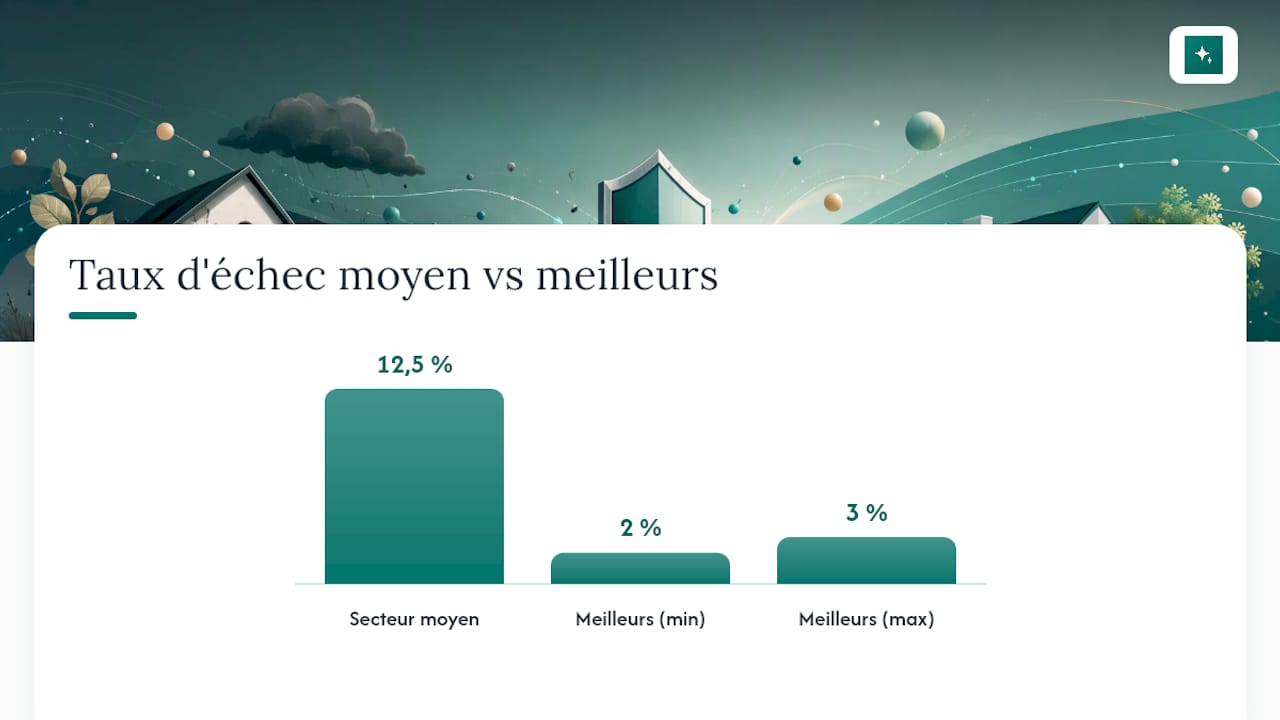
Most guides on short-term rental cleaning treat defects as one-off mishaps: a stain, an odor, a forgotten task. The data tells a different story. An average industry turnover failure rate of around 12.5%, while the best-performing portfolios reach 2 or 3%, shows that the gap is not a matter of luck or more conscientious staff. It is a matter of systems.
The underestimated point: most property managers invest in training cleaners before investing in tracking the work. It is the other way around that works. A timestamped photo checklist, even used by an average team, produces more consistent results than an experienced team with no documentation. Photo evidence does not replace expertise; it makes expertise visible and correctable.
The number-one priority for 2026: stop treating cleaning and maintenance as two separate disciplines. The defect your cleaner does not flag today becomes the complaint that costs you a booking in three weeks.
, Jonathan
Cleanclac turns your checklist into a system that misses nothing
A paper checklist left in a drawer catches no defects. Cleanclac replaces that fragile system with automatic synchronization with your Airbnb, Booking, Abritel, and Vrbo bookings: as soon as a checkout is confirmed, the cleaner receives their assignment with no manual input on your part.

Each cleaner has their own mobile access to view their schedule, submit reports with photos and videos, and report the real condition of the property in real time, making photo inspection routine rather than occasional. The integrated supply tracking prevents shortfalls in linen or cleaning products, a frequent cause of avoidable defects. With no commission on services and compatibility with the leading PMS platforms on the market, the tool works equally well for a host managing two properties and an agency managing dozens. For a portfolio of two properties, pricing starts at €9.99 per month. Check the full pricing page and try automatic synchronization on your next turnover.
Sources
For more detail on the figures cited in this article, RapidEye publishes in-depth data on the impact of cleanliness defects on guest ratings, as well as inspection statistics comparing photo accuracy with in-person walkthroughs. Breezeway analyzed over 300,000 incidents to map the most problematic areas. ReadyRental provides additional insight into staffing pressures in the sector. For structuring your guest arrival checks, the check-in workflow guide from Wild Foodz is a useful practical reference.
- Vacation Rental Guest Complaint Statistics (2026) | RapidEye
- Vacation Rental Inspection Statistics (2026) | RapidEye
- We analyzed over 300,000 issues in vacation rentals. Here's what we found
- Airbnb Cleaning Statistics (2026): 30 Verified Numbers
Frequently asked questions
What are the most damaging recurring cleaning defects?
Odors, stained linen, mold in grout lines, and signs of pests cause the steepest drops in ratings. An untreated linen stain leads to a two-star review or lower in a significant share of cases.
How much does software like Cleanclac cost for managing cleaning?
Pricing starts at €9.99 per month for two properties, with tiers at around €14.99 for three or four properties and €19.99 for five. A free plan also exists for smaller portfolios, with no published price specified.
What is the difference between a photo inspection and an in-person inspection?
A photo inspection catches around 87% of the errors an in-person inspection would find, versus 98% for a full physical walkthrough. Photos are sufficient for routine volume; in-person inspection remains useful for high-stakes properties.
What turnover failure rate is considered acceptable?
The industry average is around 12.5%, while well-organized professional portfolios aim for under 5%.
How do you reduce supply shortages during cleaning?
A minimum safety stock of linen, cleaning products, and light bulbs prevents a depleted supply from becoming a visible defect for the guest. Some tools include real-time supply tracking to anticipate these shortfalls.