Mobile Home Checkout Cleaning: 7-Step Checklist
A room-by-room checklist to return a mobile home spotless and protect your security deposit. Tips on ventilation, appliances, waste sorting and inspection.

Jonathan Lalinec
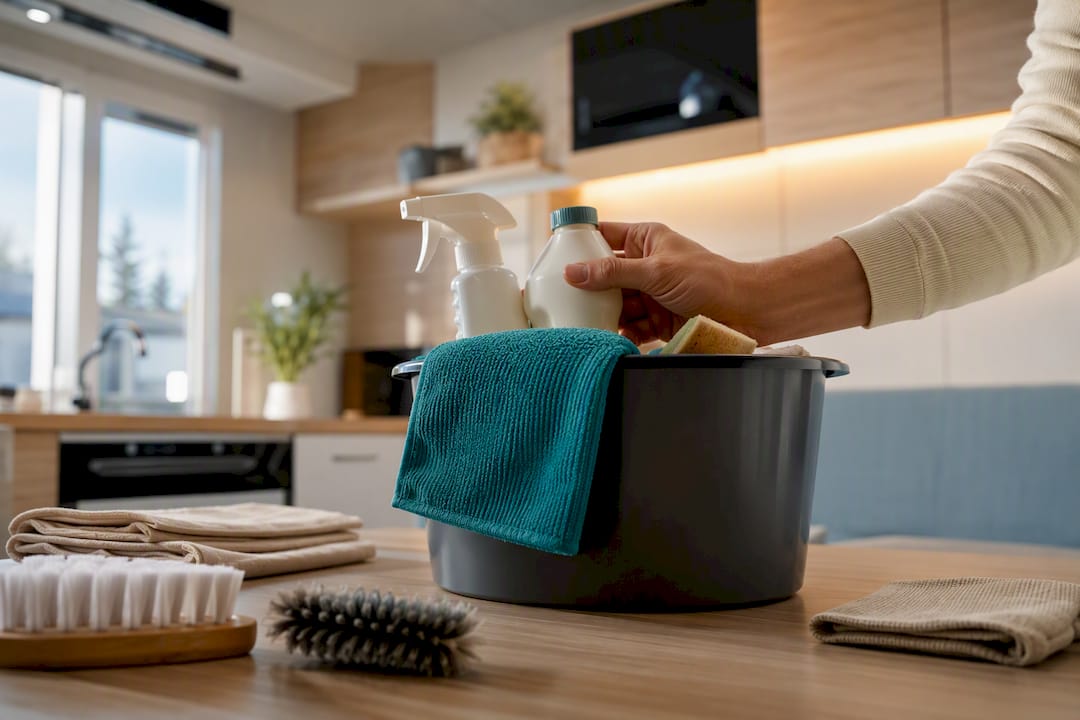
Before handing back the keys, the mobile home must be left clean: dishes put away, bins emptied, linen stripped, fridge cleared and the property aired for the recommended time. An inspection usually follows, often within a 15-minute slot, and the security deposit can be partially withheld if the cleaning falls short. The detailed checklist below covers every room so there are no nasty surprises.
In brief:
- Airing the mobile home for at least 15 minutes before you start cleaning is essential to clear moisture and odours.
- Cleaning should follow a logical order: start with the kitchen and bathroom, then the bedrooms, the living area and finally the outside, checking off each step as you go.
- Documenting the property's condition with timestamped photos limits disputes over the security deposit, especially when every room is covered.
- Never use a pressure washer on exterior cladding: it forces water under the joints and can cause damage that is invisible to the naked eye.
- Automating turnovers with a digital checklist, such as the one offered by CleanClac, improves tracking and reduces missed tasks.
Table of contents
- What checklist should you follow before leaving a mobile home?
- How do you keep a mobile home tidy during a stay?
- What equipment does the campsite provide, and what should you avoid?
- Cleaning packages, deposits and inspections: what every guest should know
- How to maintain the portable air conditioner and fridge without damaging them
- How to handle recyclable and compostable waste on site
- Is an enhanced hygiene protocol needed for mobile home cleaning?
- Why a standardised cleaning sheet makes all the difference for a property manager
- CleanClac turns your instructions into tracked, nothing-missed turnovers
- Sources
- Frequently asked questions
What checklist should you follow before leaving a mobile home?
An effective mobile home cleaning checklist always follows the same principle: work room by room, in a logical order, without skipping anything along the way. Here is the sequence that works best before handing back the keys.
- Ventilate first. Open all the windows for at least 15 minutes before you begin, to let moisture and odours escape.
- Kitchen. Empty and clean the fridge, wash and put away all dishes, wipe down the worktop and hob, empty the bin and fit a new bag.
- Bathroom. Descale the basin and shower, clean the toilet, replace towels if they are provided and wipe the mirror.
- Bedrooms. Strip the linen and pillowcases (unless the property manager instructs otherwise), vacuum under the beds and close the shutters if requested.
- Living area. Dust the furniture and storage units, sweep then mop the floor, empty ashtrays and waste baskets.
- Outside. Sweep the terrace, put away garden furniture and check that no rubbish has been left around the mobile home.
- Final check. Open every cupboard to make sure nothing has been left behind, take one last look in the fridge, then take dated photos of every room before you leave.
That last habit of taking photos is not trivial: documenting the property's condition at checkout limits disputes over the security deposit. A guest with their own timestamped photos is as well protected as the owner.
How do you keep a mobile home tidy during a stay?
A well-maintained mobile home throughout the stay makes the checkout clean far easier. A few regular habits are all it takes to stop dirt from building up.
- Air the property every day, even for just 10 minutes, to limit condensation that encourages mould on the walls.
- Wipe the hob and worktop straight after every meal: fresh grease takes ten seconds to remove, whereas dried-on grease takes several minutes.
- Give the shower a quick wipe after each use to stop limescale from taking hold.
- Empty the bins as soon as they are full rather than waiting until the end of the day, especially in summer.
- Hang or dry damp linen outside rather than leaving it over a chair: trapped moisture damages the furniture.
- Sort waste as you go rather than mixing everything into one bag, which saves a tedious sort on the last day.
These habits take just a few minutes a day, but they transform the final clean: instead of a full deep-clean, only a quick tidy-up remains.
What equipment does the campsite provide, and what should you avoid?
Most campsites and property managers leave basic equipment on site, but it does not always cover every need. A standard kit typically includes a broom, dustpan, toilet brush, non-abrasive sponges and sometimes a compact vacuum cleaner. Some managers also supply washing-up liquid and bin bags; others leave that to the guest. It is worth checking at the time of booking.
The choice of products matters as much as how often you clean. On PVC or laminate surfaces, a mild, non-abrasive product is perfectly sufficient. On stainless steel, a lightly dampened microfibre cloth avoids streaks without scratching. Best practice for exterior maintenance strongly advises against using a pressure washer on cladding: it can force water under the joints and cause leaks that are invisible to the naked eye.
- Always choose a microfibre cloth over an abrasive sponge on varnished surfaces.
- Avoid harsh solvents (white spirit, concentrated degreasers) that attack plastic finishes.
- Never use a pressure washer, even on a low setting, on exterior cladding.
Pro tip: always keep a dry cloth handy to go over any surface you have just cleaned with water. A wet surface left to air-dry often leaves limescale marks, especially on stainless steel.
Cleaning packages, deposits and inspections: what every guest should know
A cleaning package taken out at the time of booking transfers the full clean to the property manager, but these packages often exclude the dishes and the inside of the fridge, which remain the guest's responsibility even when a package has been paid for. Without a package, the complete clean falls entirely on the guest before checkout.
- Check your contract to confirm whether a cleaning package was included and exactly what it covers.
- Prepare for the inspection, which typically takes place within a slot of around 15 minutes, either the evening before checkout or on the day itself.
- Document the property's condition with dated photos of every room: useful evidence if there is any disagreement over the return of the deposit.
A security deposit is returned in full only if no damage is found and if the cleaning meets the minimum requirements. This is why so many campsites expect the mobile home to be left in a condition close to how it was on arrival: that is the contractual condition that determines whether any amount is withheld from the deposit.
How to maintain the portable air conditioner and fridge without damaging them
The recommended protocol always starts with 15 minutes of ventilation, then cleaning that works from top to bottom and from the back of the room towards the exit, so that a cleaned area is never dirtied again.
- Clean the portable air conditioner's filters every two weeks, and carry out descaling once a month depending on use.
- Empty and dry the condensate tray completely before switching the unit back on: residual moisture encourages bacteria and bad odours.
- Empty the fridge between stays and wipe the inside with a mild product to prevent lingering smells.
- Never use a pressure washer on the exterior cladding: the risk of water getting behind the panels far outweighs any time saved.
Pro tip: after cleaning the condensate tray, leave it to air-dry for at least an hour before plugging the unit back in. Inadequate drying is the most common cause of musty smells in portable air conditioners.
How to handle recyclable and compostable waste on site
Waste sorting is one of the most commonly overlooked parts of a mobile home cleaning checklist, yet most campsites now require the use of separate collection points. Before leaving, empty three distinct streams: recyclable packaging (plastic, cardboard, glass), compostable waste (vegetable peelings, food scraps) and general household rubbish.
Recycling bins are usually located near the reception or the shared bathroom blocks, rarely right beside each pitch. It is worth finding out where they are on arrival rather than discovering on the day of checkout that you have to carry heavy bags across the entire site. Food waste deserves particular attention: a bag left in a sealed indoor bin for several days attracts insects and odours, and makes the final clean considerably harder.
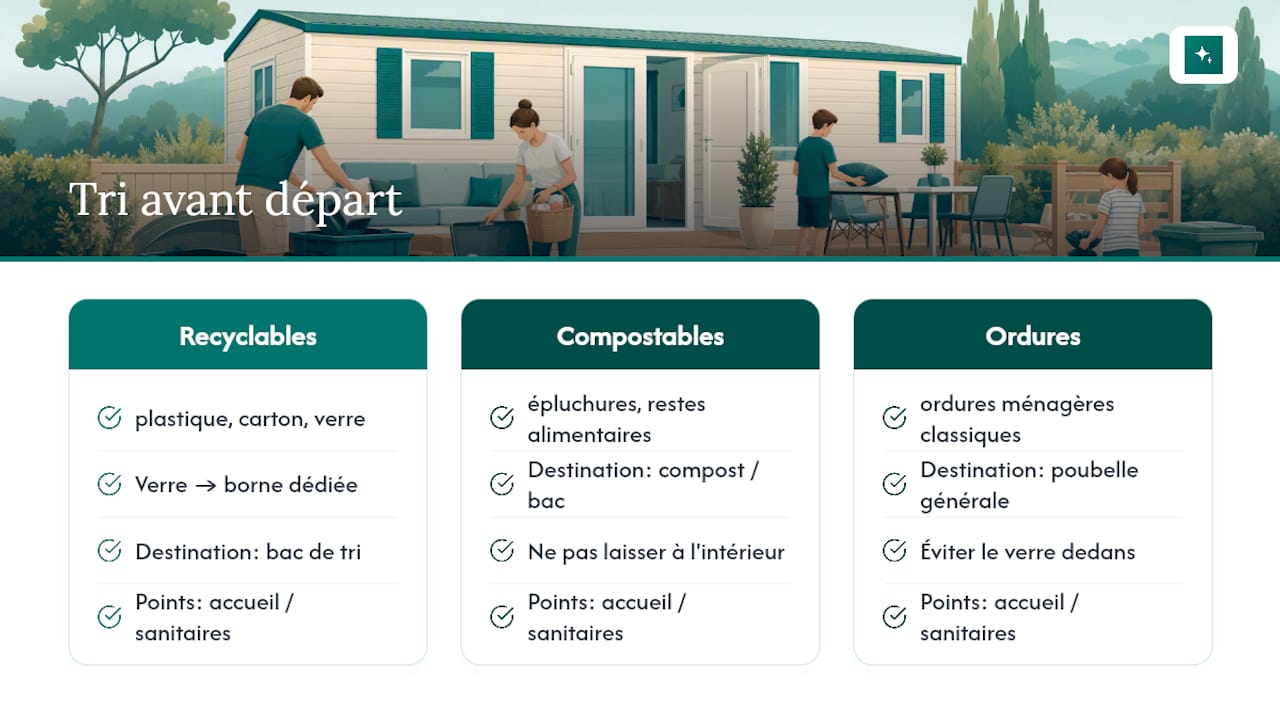
Some campsites offer a communal compost facility for seasonal residents; ask at reception if you are staying for several weeks. For a short stay, the key rule is never to leave organic waste inside the mobile home between cleans, even in a closed bin. Glass, often forgotten in the rush of departure, must be taken to a dedicated bottle bank and never put in with general rubbish, otherwise it undermines the site's recycling effort as a whole.
Is an enhanced hygiene protocol needed for mobile home cleaning?
Enhanced hygiene protocols, which became widespread during epidemic periods, remain good practice even outside any particular health context. Some property managers keep them in place continuously for the most frequently touched surfaces.
High-contact surfaces, door handles, light switches, taps and remote controls, deserve a systematic disinfecting pass on top of the standard clean, whatever the time of year. A microfibre cloth dampened with a disinfectant suitable for plastic and metal surfaces is enough; there is no need to multiply different products.
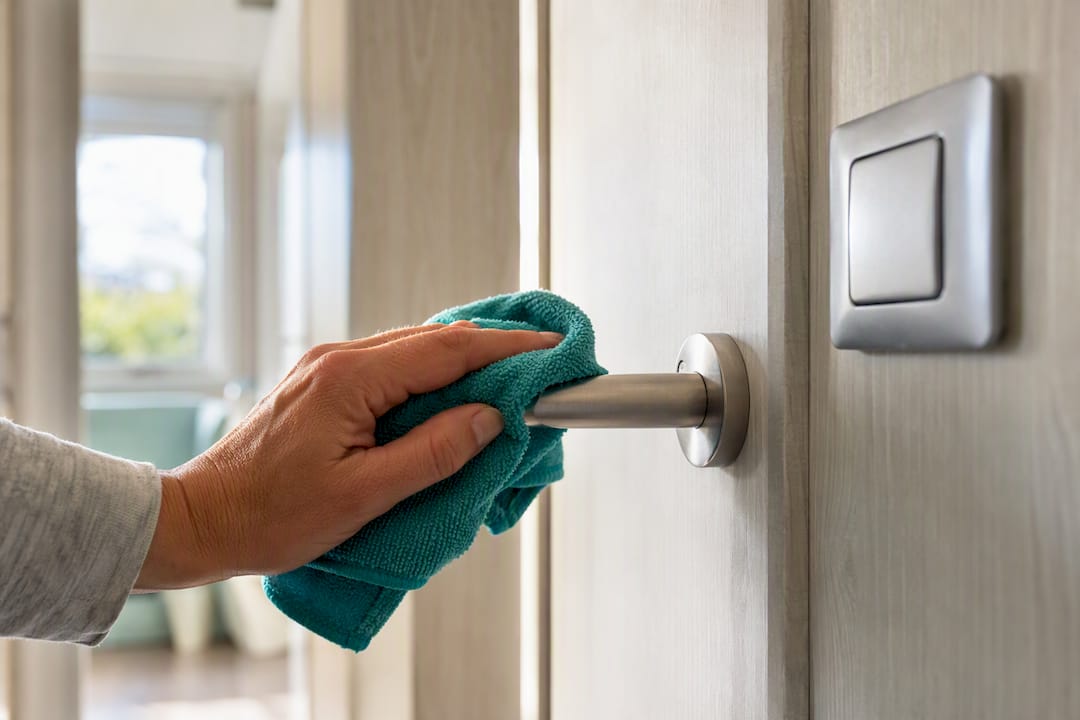
For textiles, bed linen and towels provided by the property manager, washing at a high temperature (60 °C minimum) remains the standard during periods of heightened health vigilance. Between guests, airing the mobile home for longer than the usual 15 minutes, ideally half a day when the calendar allows, further reduces the risk of airborne transmission.
These steps do not replace a standard clean: they are added on top of it. A property manager who documents these extra steps, through a dedicated checklist or timestamped photos, reassures guests without needing to spell it out with every booking.
Why a standardised cleaning sheet makes all the difference for a property manager
A checkout sheet sent with the booking confirmation reduces missed tasks far more effectively than a reminder sent the evening before. Pairing that sheet with dated photos taken at checkout protects both the guest and the owner if there is any disagreement over the deposit. And giving cleaning teams mobile access to checklists prevents inconsistencies from one turnover to the next.
, Jonathan
CleanClac turns your instructions into tracked, nothing-missed turnovers
Keeping a cleaning sheet up to date and making sure every cleaner follows it becomes complicated quickly when several mobile homes or properties are managed at the same time. CleanClac automates turnover scheduling based on your booking calendar, whether reservations come from Airbnb, Booking.com or Abritel, with no need to rebuild a schedule manually every time a new booking comes in.
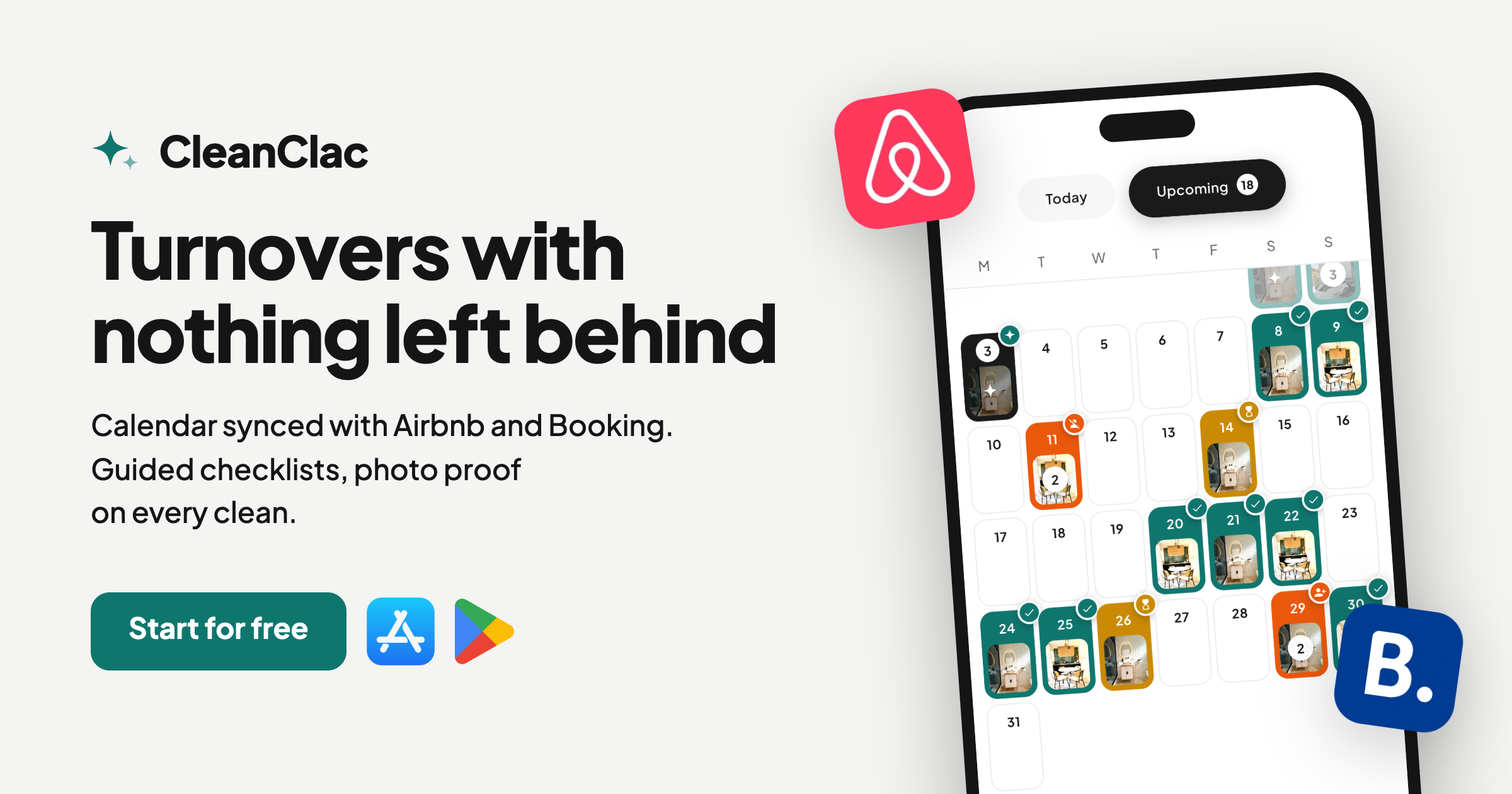
Each cleaner has their own smartphone access with a tailored checklist, which helps prevent missed items during inspections. Photo and video reports make it easier to track the property's condition, and supply monitoring lets you anticipate what is needed before each arrival. This traceability helps limit disputes over security deposits. Discover the CleanClac app and see how it organises your turnovers from your next booking calendar onwards, or browse our comparison of Airbnb cleaning software to identify the right fit for your needs.
Sources
- Cleaning (instructions, packages, deposit or security deposit…)
- The ideal cleaning protocol for a mobile home.
- How to clean a portable air conditioner: a simple, effective guide. ❄️
Frequently asked questions
What are the 3 rules of cleaning?
Ventilate before you start, clean from top to bottom, then always finish with the floors: this order prevents you from dirtying an area you have already cleaned.
What is the protocol for cleaning a mobile home?
Ventilate for at least 15 minutes, work room by room from the back towards the exit, then finish by checking every cupboard and the fridge before photographing the property's condition.
What is the best app for organising mobile home cleaning?
For a property manager handling several rentals, an app like CleanClac lets you schedule turnovers automatically based on reservations and collect photo evidence in real time.
In what order should you clean?
The logical order runs from the kitchen and bathroom through the bedrooms and living area, then outside, always finishing with the floors in each room.


