Guest Supply Checklist for Property Managers
Stock every room without missing a thing: a room-by-room supply checklist, reorder thresholds, and a ready-to-use template for short-term rental managers.

Jonathan Lalinec
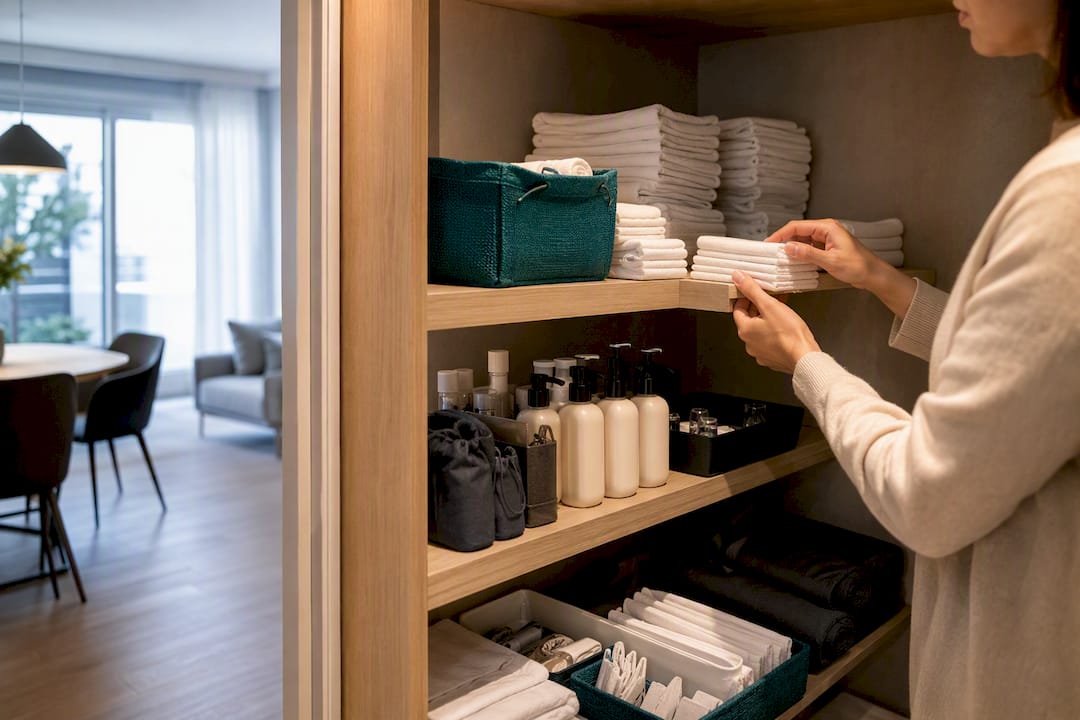
Here is the actionable checklist for preparing a guest-ready property: a room-by-room list, reorder thresholds, and a ready-to-use template. You can track this inventory on paper or automate it through a mobile app that alerts your cleaning team as soon as a reorder threshold is reached.
In brief:
- Effective supply management relies on a room-by-room checklist, tailored to the property's capacity and type, to avoid anything being missed during a turnover clean.
- A basic welcome kit costs under €3 per turnover, while a premium pack can exceed €7, depending on the level of service you want to deliver.
- Stock checks should be carried out at every turnover, with an alert threshold set at 20% and periodic checks of expiry dates.
- Going digital, via a mobile app, lets cleaners tick items in real time, flag stockouts, and centralise alerts for simpler management across all properties.
- Non-mandatory but guest-expected amenities, such as a hair dryer or fast Wi-Fi, have a significant impact on satisfaction and overall ratings.
Table of contents
- Guest supply checklist room by room: bedroom, bathroom, kitchen, living area
- Welcome kit and courtesy tray: what to include and what to budget
- Cleaning supplies and reorder thresholds to keep to
- Before check-in: the final checklist and the welcome guide
- Legally required equipment vs supplies that make the difference
- Three service levels and their cost per turnover
- Turning the checklist into a repeatable inventory process
- Adapting the checklist template to your property type
- What really makes the difference at guest arrival
- Automating supply tracking with Cleanclac
- Sources
- Frequently asked questions
Guest supply checklist room by room: bedroom, bathroom, kitchen, living area
An effective guest supply checklist is built room by room, not product by product. That is the only way to miss nothing when preparing a property between bookings, especially when several rentals are turning over at the same time.
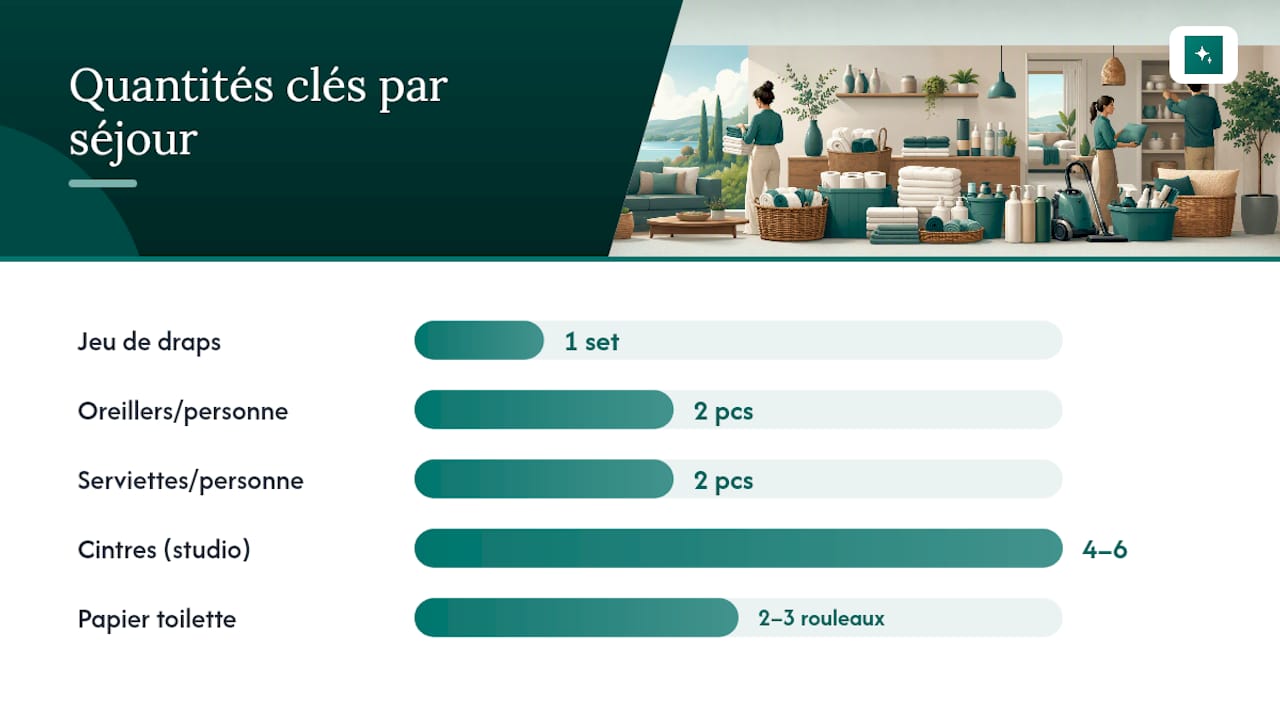
In the bedroom, the basics hardly ever change: a set of clean linen per bed, two pillows per person, a duvet or blanket suited to the season, and enough hangers (allow 4 to 6 for a studio, up to 10 for a two-bedroom). Add an alarm clock or a small bedside tray for personal items, often overlooked but frequently requested by guests who need somewhere to put their things when they arrive.
In the bathroom, this is the room that generates the most complaints when something is missing. The minimum list:
- One bath towel and one hand towel per person (so 2 for a couple, 4 to 6 for a family of 4 or 5)
- A bath mat
- Toilet paper (allow one open roll plus a visible reserve, meaning 2 to 3 rolls for a 3- to 4-night stay)
- Soap or shower gel, ideally in a refillable dispenser to cut down on plastic waste
- A hair dryer, now a standard expectation even in budget rentals
In the kitchen, crockery (plates, glasses, cutlery) must cover the property's maximum occupancy, plus two extra place settings for an unexpected guest. Add a fresh sponge, a clean tea towel, washing-up liquid, salt and pepper, and ideally some coffee or tea for the first morning. For a property sleeping 5 or more, double the bin bag quantities and check that the fridge capacity genuinely matches the number of guests listed.
In the living area and hallway, a doormat, a visible bin with spare bags, and if possible a small first-aid kit are enough. For higher-end properties, an extra throw and a side lamp noticeably improve the perception of comfort at very little cost.
On sustainability, favour products carrying a recognised eco-label and refillable dispensers over single-use mini bottles. The cost per use falls from the third or fourth turnover onwards, and the argument carries growing weight in guest reviews.
Welcome kit and courtesy tray: what to include and what to budget
A welcome kit is not a legal requirement, but it has become the professional signal guests look for before they have even stepped inside the property. The law sets a baseline of equipment; it is the care put into the welcome kit that makes the difference in reviews.
- The basic kit: a few coffee pods or tea bags, sugar, and a bottle of water per person. This level generally costs under €3 per turnover and is enough to head off most kitchen-related questions at check-in.
- The standard kit: add biscuits or a small local snack, a quality soap, and a printed welcome note. Budget between €2 and €8 depending on the products chosen and quantities.
- The premium kit: include a local speciality, wine or a regional product, higher-end toiletries, and a handwritten card. The budget then rises to between €7 and €12 per turnover, an amount that is easy to justify for properties positioned at the top of the market.
On presentation, always place the courtesy tray somewhere clearly visible on arrival, never tucked away in a cupboard. Pre-packed single-dose kits, such as those offered by specialist suppliers, make it possible to standardise the presentation from one turnover to the next while cutting your team's preparation time. For properties that lean into a local culinary experience, specialist resources on gastronomy and accommodation offer practical ideas for showcasing regional products on the welcome tray.
Cleaning supplies and reorder thresholds to keep to
A standard cleaning kit left on-site should contain a sponge, a measured dose of multi-purpose cleaner (allow 15 to 20 ml per use), 30-litre bin bags, and a spare toilet roll. Some suppliers offer kits pre-packed in single doses with a 20 ml eco-labelled cleaner, which simplifies stock management for a team covering several properties.
To set a realistic reorder threshold, start from the average length of stay and the turnover frequency of your property rather than an arbitrary quantity. A property turning over every two nights burns through consumables far faster than one let by the week, even if the floor area is identical.
- Set an alert threshold at 20% of remaining stock for cleaning products
- Check expiry dates on food items at every monthly inspection
- Buy consumables such as toilet paper and bin bags in bulk to reduce the unit cost by 15 to 30%, depending on the supplier
Pro tip: Never stock more than three months' worth of consumables at a single property at once. Scented toiletries and cleaning products lose quality over time, and excess stock makes it harder to do a quick visual check during an inventory.
Before check-in: the final checklist and the welcome guide
A quick check just before check-in prevents most unpleasant surprises.
- Photograph each room to document the property's condition before the guest arrives
- Test the Wi-Fi, air conditioning or heating, and the main appliances
- Confirm that the welcome kit and cleaning supplies are in place and fully stocked
- Check that the key safe or smart lock is working correctly
The welcome guide remains the most underrated tool in the entire preparation process. At a minimum it should include the Wi-Fi code, instructions for using the appliances, local emergency numbers, and a few restaurant or shop recommendations nearby. On access, key safes remain cost-effective and reliable, but smart locks significantly reduce the back-and-forth messages caused by late arrivals. Our guides on welcoming guests go into detail on how to structure an effective welcome guide.
Legally required equipment vs supplies that make the difference
Decree no. 2015-981 sets a minimum baseline of equipment for furnished tourist rentals: complete linen, functional kitchen equipment, and basic cleaning supplies. The text imposes no cosmetic amenities, no welcome tray, and no hair dryer.
Yet it is precisely these non-mandatory supplies (quality soap, coffee, a hair dryer, fast Wi-Fi) that guests today treat as a baseline expectation. If your budget is tight, focus the effort on the bathroom and the internet connection. These are the two areas that generate the most negative reviews when they fall short, far more than the absence of a complimentary breakfast.
Three service levels and their cost per turnover
Structuring your offering in tiers makes it easier to calculate your supply budget.
The standard level covers a basic cleaning kit and a minimal welcome tray, at a cost generally below €3 per turnover according to market estimates. The professional level adds better-quality toiletries and a local snack, coming in between €4 and €9 per turnover. The premium level incorporates local produce and a personal touch, between €7 and €12.
To calculate your return on investment, compare this cost against the time saved in avoided guest messages and the real impact on the average rating of your listings. A few extra euros per turnover often costs less than a delayed response to a dissatisfied guest.
Turning the checklist into a repeatable inventory process
A guest supply checklist that stays on paper will always end up forgotten by the third turnover. The right move is to turn it into a structured inventory: one column per item, a reorder threshold, a reference photo, and the associated supplier.
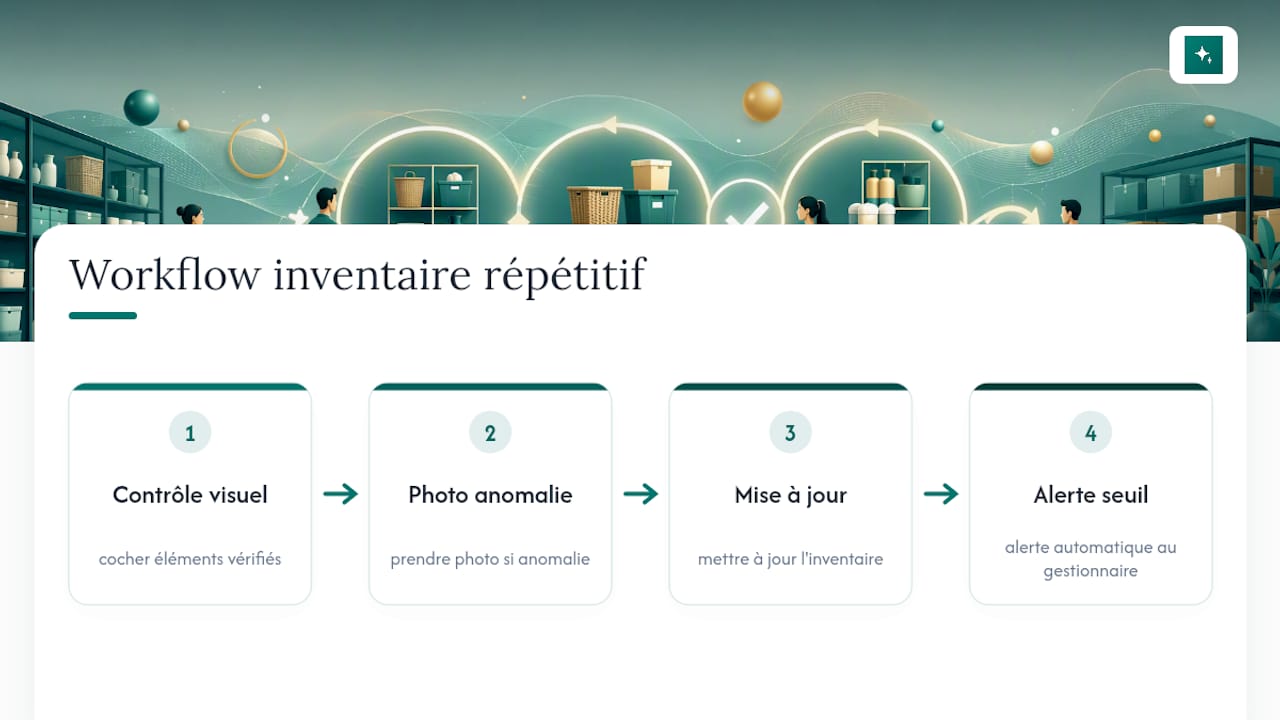
The most efficient workflow follows four steps at every turnover: visual stock check, photo if anything looks wrong, inventory update, then an automatic alert if a threshold is crossed. This is exactly what a mobile app with individual cleaner access makes possible. Each cleaner ticks off the items they have checked, sends a real-time photo report, and the manager receives an alert as soon as a product approaches stockout.
Adapting the checklist template to your property type
The checklist template is built around six simple columns: item, quantity provided, alert threshold, reference photo, supplier, and a free notes field for one-off remarks. This structure works equally well for a studio and a large group property; simply adjust the quantities for each property type.
For a bed and breakfast, cut down the columns related to multiple stock locations since the host is usually on-site. For a hotel or a multi-property concierge operation, add a dedicated column for automatic alerts. The template is available as a printable PDF, a Google Sheet, or a CSV import for direct integration into a property management tool.
What really makes the difference at guest arrival
The absolute priority remains the essential consumables for the first morning: coffee, toilet paper, soap. Many managers still think in terms of a one-off shopping list, whereas a proper inventory system with real thresholds prevents far more stockouts. Measure your thresholds against the actual turnover frequency of each property, not a theoretical average that never reflects what happens on the ground.
, Jonathan
Automating supply tracking with Cleanclac
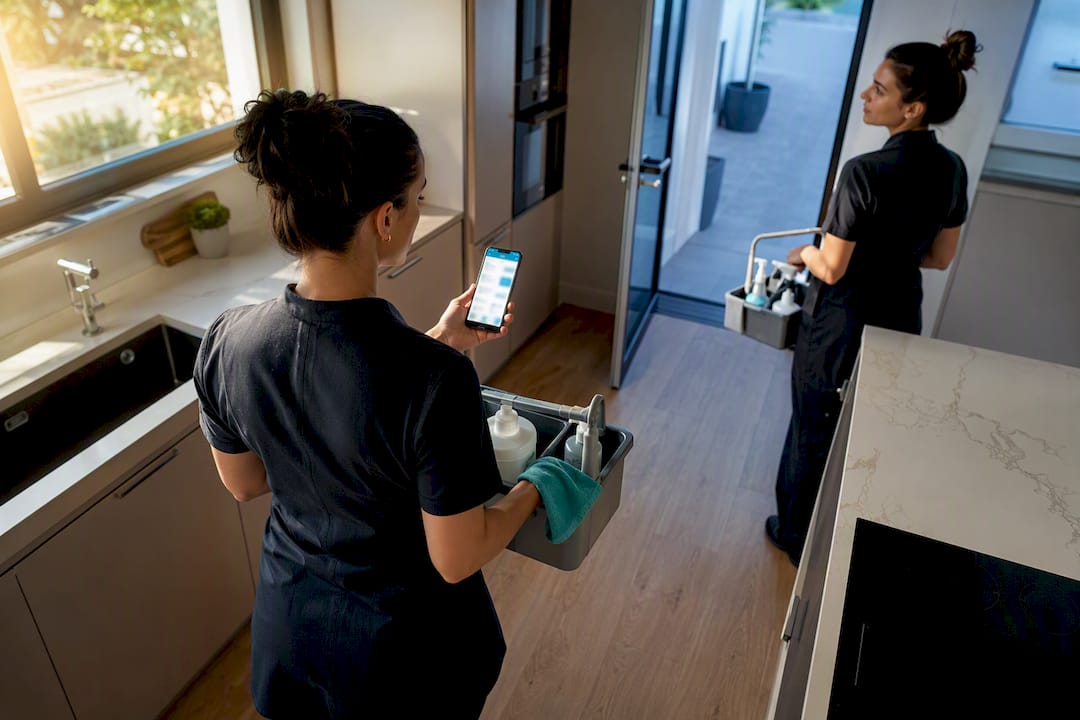
A digital system can turn this paper checklist into a living process. Each cleaner can have individual smartphone access to tick off verified supplies, flag a low stock, and send a photo report in real time, with no phone calls or manual messages to handle.
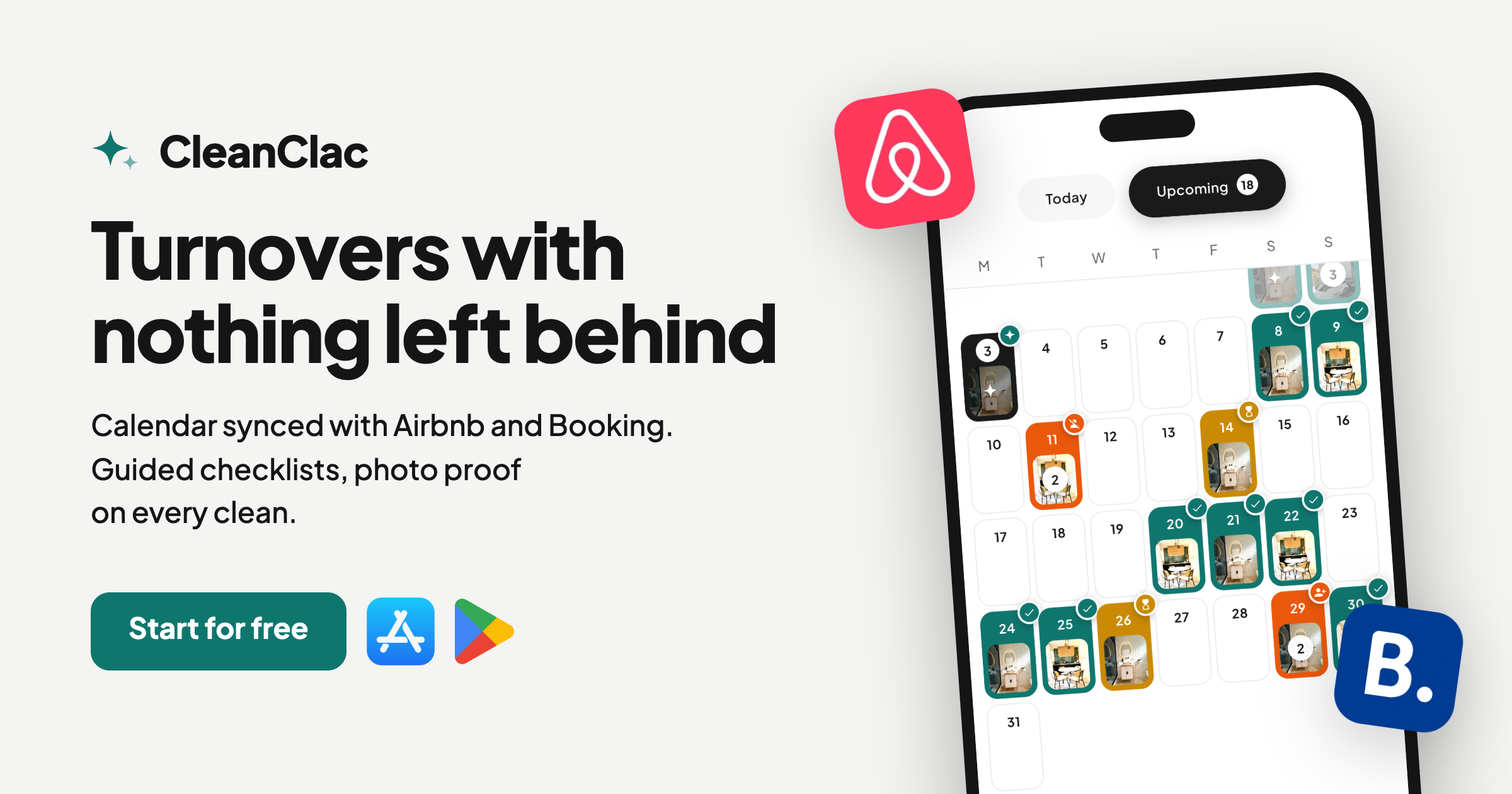
The app automates cleaning schedules according to your Airbnb, Booking.com, or Abritel reservations, and centralises stock tracking for all your properties in a single dashboard. This is particularly useful for multi-property managers and concierge operators who can no longer afford to check every property by hand. The free plan lets you test how it works, and paid plans start from two managed properties. If you manage a cleaning team, check out the page dedicated to cleaners to see how they access their schedule and checklist directly from their phone.
Sources
- Lodgify · Welcome kit inventory
- Legifrance · Decree no. 2015-981
- Tweelo · Airbnb welcome kit: complete list 2026
- Litex · Zen Entretien welcome kit
- Minut · Welcome kit for short-term rentals
Frequently asked questions
What should a basic guest supply checklist include?
It should cover linen, the bathroom (towels, toilet paper, soap), the kitchen (full crockery, basic staples) and a cleaning kit. Decree no. 2015-981 sets the minimum legal requirements, but guests also expect a welcome tray and working Wi-Fi.
How much does a welcome kit cost per turnover?
A basic kit generally costs under €3 per turnover, while a premium kit with local produce can reach €7 to €12. The choice depends on where your listing is positioned and the level of service your guests expect.
How often should the supply inventory be checked?
The inventory should be checked at every turnover between guests, with a full update of reserve stocks each month as recommended. This frequency prevents stockouts of essential consumables such as toilet paper or coffee.
How can supply tracking be automated across multiple properties?
An app like Cleanclac lets each cleaner tick off checked supplies from their smartphone and send a real-time report to the manager. This eliminates phone calls and centralises reorder alerts across every property managed.
Are a hair dryer and coffee legally required?
No, these items are not part of the minimum requirements under Decree no. 2015-981, which focuses mainly on linen and kitchen and cleaning equipment. They have nevertheless become a commercial standard expected by the majority of guests, to the point of directly influencing reviews left after a stay.