Find an Emergency Cleaner in 1 Hour with a Contact List
A step-by-step checklist for property managers: find and assign an emergency cleaner in 60 minutes, with escalation procedures and automation tips to prevent repeat issues.

Jonathan Lalinec
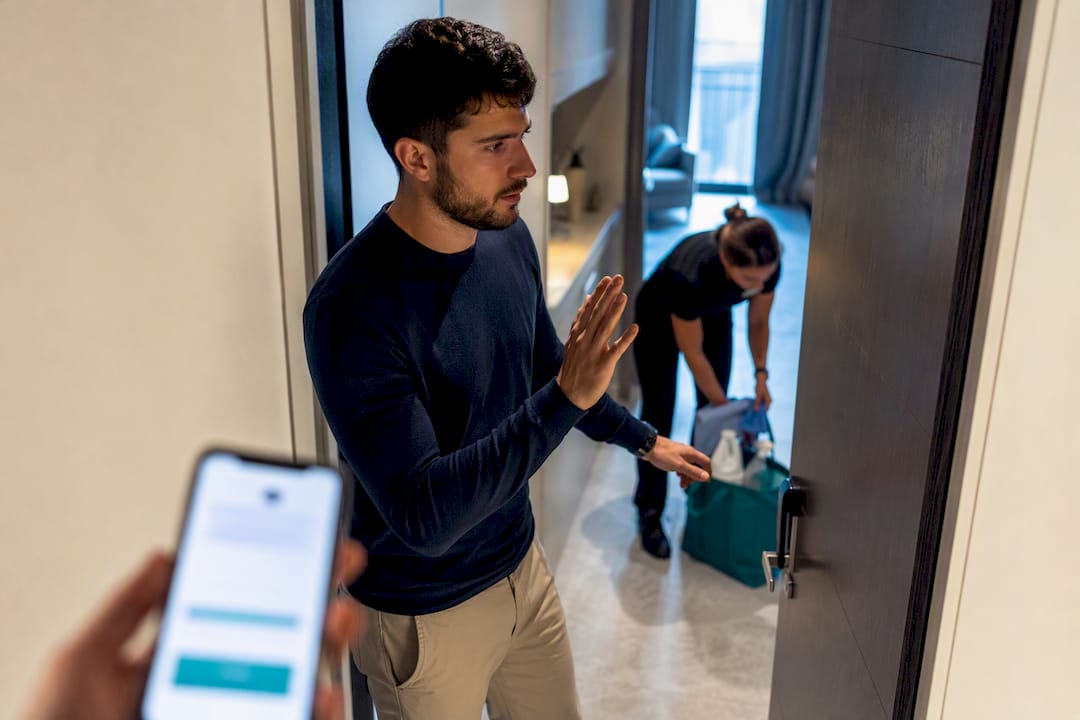
Finding an emergency cleaner for a booking requires three simultaneous actions: calling your primary cleaner then your backup within fifteen minutes, securing and sharing property access via a rotating code, and preparing spare linen and the restock kit on site. The guest needs a transparent notification while all three fronts move forward in parallel.
In brief:
- In an emergency, call the primary cleaner first, then the backup if there is no response within five minutes, to maximise speed.
- Using a rotating code for property access and preparing spare linen on site cuts the time spent on logistics.
- Priority should go to a reliable cleaner who knows the property, followed by an agency if they are unavailable, to guarantee both quality and speed.
- Installing a smart lock, labelled stock cupboards, and multiple linen sets can reduce turnover disruptions by 15 to 120 minutes.
- Automating cleaning task creation through sync with booking platforms limits errors and speeds up emergency processes.
Table of contents
- How to find an emergency cleaner within the hour
- Which channels to use to get someone in fast
- Which systems reduce the frequency of emergency cleans
- What checklist to follow for an effective emergency clean
- What to do in the event of a no-show or late checkout
- How automation prevents these emergencies from recurring
- Build the process first, then choose the tool
- CleanClac turns the emergency clean into a non-event
- Sources
- Frequently asked questions
How to find an emergency cleaner within the hour
A standard turnover window typically lasts between one and three hours, and that time constraint must dictate the order of actions the moment something goes wrong. Every minute lost deciding who to call first eats into the time available for the clean itself.
Here is the sequence to follow:
- Call the cleaner assigned to the booking. If there is no answer within five minutes, move immediately to the designated backup.
- Activate the reserve agency if the individual backup cannot make it within the required window.
- Check property access and send the code or entry link to the cleaner you have mobilised.
- Send the guest a transparent message letting them know there may be a slight adjustment to the check-in time.
- Gather the spare linen and supplies kit already on site to avoid any back-and-forth trips.
- Flag the booking as a same-day turn in your schedule and notify the relevant team so no other clean is booked on top of it.
Pro tip: keep a pre-written call list with numbers in priority order, pinned inside your management tool. Under stress, hunting for a number in your contacts wastes time you simply do not have.
Which channels to use to get someone in fast
Each mobilisation channel has its strengths and its limits. Knowing the call order prevents you from wasting precious minutes trying the wrong option first.
- Your regular cleaner remains the most reliable choice: they already know the property, where the supplies are kept, and the owner's specific expectations.
- The pre-trained local backup should be your second call. Operations handling high volumes recommend at least two backups for every five primary cleaners, a ratio that ensures coverage even when two people are unavailable at once.
- General-purpose marketplaces offer speed but often limited understanding of turnover: a cleaner with no short-term rental experience risks missing critical points such as linen changeover or equipment checks.
- An agency kept on retainer (under an ongoing contract) should remain the last resort for one-off emergencies, but it becomes highly effective when the relationship is already established: consistent volume with an agency guarantees priority treatment at the critical moment, whereas a one-off call rarely delivers satisfactory quality.
Negotiating emergency surcharge rates before any incident occurs avoids high-pressure conversations and inflated last-minute pricing. Specialist marketplaces sometimes offer auto-assignment, but their local pools vary considerably by area.
Which systems reduce the frequency of emergency cleans
Same-day turns that run smoothly rely on four systems prepared in advance, according to practitioners in the industry. These setups do not eliminate surprises, but they significantly reduce how often they happen and how severe they are.
- A smart lock with rotating codes eliminates physical key handovers and saves between 15 and 25 minutes on each visit, a decisive gain when the available window is measured in hours.
- A labelled stock cupboard with a clearly identified par level (linen, products, consumables) prevents supply runs in the middle of an emergency.
- A linen swap inventory, meaning two to three complete sets of linen per bed, means you never depend on the washing machine cycle, which alone takes between 60 and 120 minutes.
- A zone-by-zone photo checklist documents the state of the property before and after the clean, protecting both the owner and the cleaner in the event of a dispute over damage.
These cumulative gains (15 to 25 minutes on access, 60 to 120 minutes saved on linen) turn a tight turnover window into a repeatable operation, reproducible booking after booking. The guide on sizing your linen sets explains how to calculate the exact number of sets you need based on your bed count.
What checklist to follow for an effective emergency clean
A condensed SOP (standard operating procedure) protects both cleaning quality and your revenue in the event of a later dispute. The order of steps matters as much as carrying them out.
- Do an initial walkthrough and photograph any pre-existing damage before starting the clean. This prevents any dispute about who is responsible for what.
- Start the washing machine immediately if you have no linen swap available, or pull the spare sets directly from the stock cupboard.
- Work through the property in logical order: bedrooms, bathrooms, kitchen, then shared spaces, finishing with restocking consumables (coffee, toilet paper, welcome supplies).
- Do a final photo inspection of each room before leaving.
- Move the booking to "ready" status in your management app, which automatically triggers notifications to the guest and the team.
Pro tip: photograph the same angles at every visit (made bed, bathroom, kitchen worktop). That consistency makes it easy to compare two stays and quickly spot a recurring issue.
What to do in the event of a no-show or late checkout
The rule that works best is straightforward: if the cleaner has not confirmed their arrival within 90 minutes of the scheduled time, activate the backup without waiting any longer. Every additional minute of hesitation reduces the window available for the replacement solution.
Preparing guest message templates in advance, combining transparency about the situation with a pre-approved compensation scale based on the delay, significantly reduces the risk of a public escalation or a refund request.
- Local groups of independent cleaners, often active on neighbourhood messaging apps, offer decent responsiveness but variable quality.
- General task apps let you find someone quickly, at the cost of explaining your full expectations to a new person each time.
- A retainer agreement with a local agency, negotiated upfront for high volumes, remains the most reliable solution over time: it guarantees priority treatment even during peak demand.
How automation prevents these emergencies from recurring
Automating task creation from your booking system relies on three technical components: calendar sync, assignment rules, and photo verification at the end of each visit. Without all three connected, every new booking becomes a manual coordination problem all over again.
- Syncing with booking platforms (Airbnb, Booking.com, Abritel) automatically creates a cleaning task as soon as a checkout date is confirmed.
- Assignment rules allocate the task to the right cleaner based on availability and location, with an automatic backup if the first choice does not confirm.
- Photo verification at the end of each visit replaces a physical inspection and builds a searchable history in the event of a dispute.
This kind of automation cuts primarily the coordination hours spent on the phone, and reduces the number of missed turnovers more than it reduces cleaning time itself. A cleaning management app that centralises all three functions, with mobile access for each cleaner, turns a high-pressure operation into a repeatable process.
Build the process first, then choose the tool
The order of priorities matters more than the technology you pick: write your SOP first, train two backups per group of cleaners, and build your linen par before looking for software. An automation tool amplifies a process that is already solid. It never replaces one. Measure success by counting incidents avoided and coordination hours recovered, not by the number of features switched on.
, Jonathan
CleanClac turns the emergency clean into a non-event
CleanClac is the alternative to manual phone coordination for property managers handling multiple short-term rentals: a booking triggers assignment directly, with no call and no chasing.
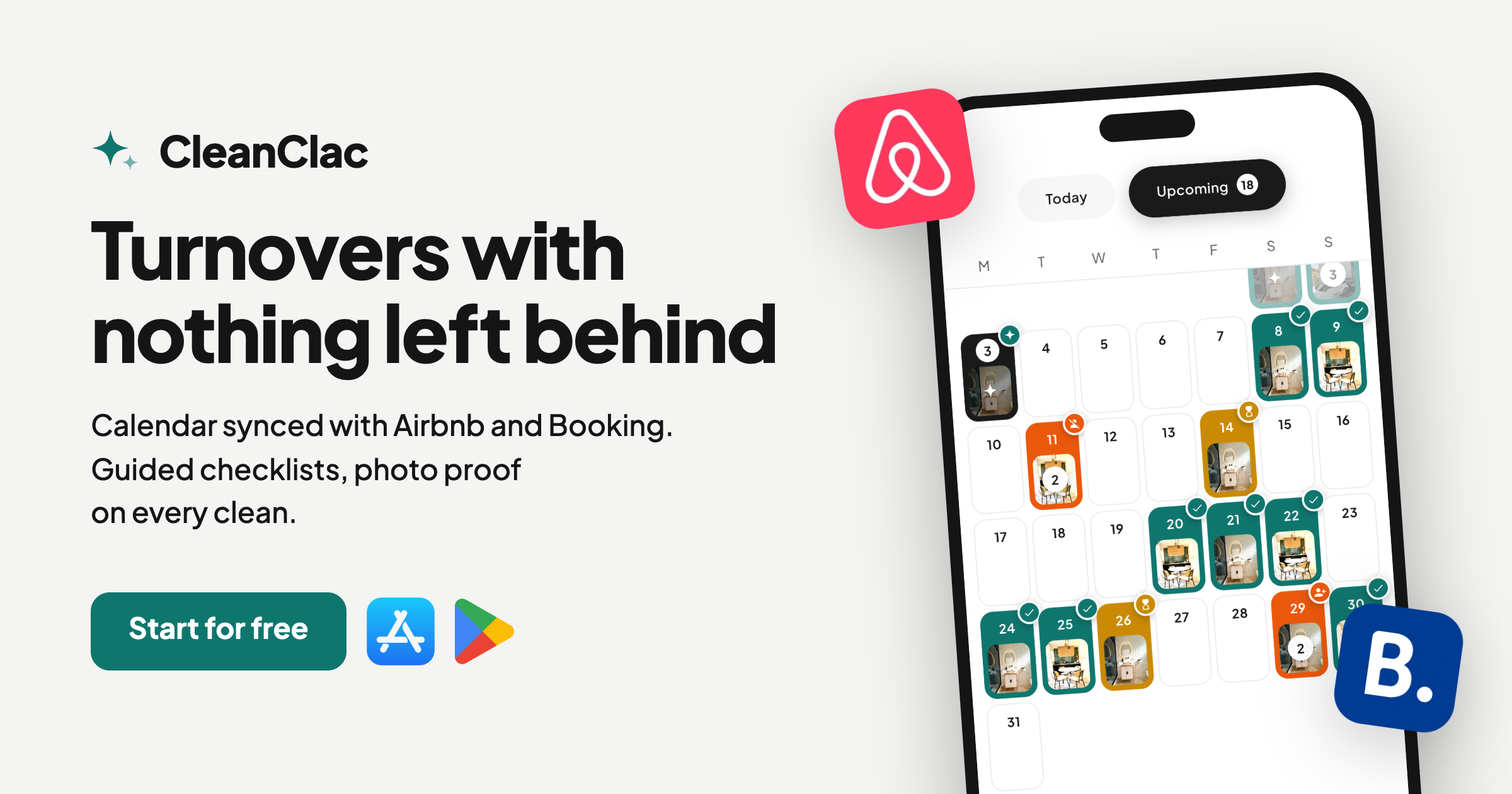
The app syncs your Airbnb, Booking.com, and Abritel calendars to automatically create a cleaning task as soon as a checkout date is confirmed, with an instant notification sent to the relevant cleaner on their own smartphone. Each cleaner has their own individual access, which removes any need to manage shared schedules manually. Real-time photo reports let you check the state of the property without going on site, and supply tracking flags when the stock cupboard needs restocking before a shortage becomes an emergency.
Getting started takes a few minutes: connect your booking platforms, add your cleaners with a simple invitation, and let the assignment rules do the rest. Discover the Airbnb and Booking.com cleaning management app and test the sync on your next turnover.
Sources
- Vacation rental turnover cleaning: How to Nail Same‑Day Turns
- How to Handle Cleaner No‑Shows on Turnover Day
- How to Prepare Your Vacation Rental for Same‑Day Turnover
- How to Automate Cleaning Schedules for Short‑Term Rentals (2026 Guide)
Frequently asked questions
How long does an emergency clean take in a short-term rental?
A standard turnover takes between one and three hours depending on the size of the property, and a same-day turn generally stays within that same window despite the time pressure.
When should you activate the backup cleaner?
If the primary cleaner has not confirmed their arrival within 90 minutes of the scheduled time, switch to the backup immediately.
How many sets of linen should you keep in stock?
Two to three complete sets per bed prevent any bottleneck caused by the washing machine cycle, which takes between 60 and 120 minutes.
How do you automate the detection of a booking that needs an emergency clean?
An app like CleanClac syncs booking platforms directly with cleaning schedules, triggering assignment as soon as a checkout date is confirmed, with no manual step required.
Do you have to pay more for an emergency clean?
Emergency surcharge rates should ideally be negotiated in advance with your regular cleaners and backups, rather than discussed under pressure when the situation arises.


