30-Day Pilot for Managers: Secure and Document Your Cleans
In 30 days, set up automated scheduling, timestamped photo proof, and safety procedures for your short-term rental cleans. Protect yourself from disputes.

Jonathan Lalinec
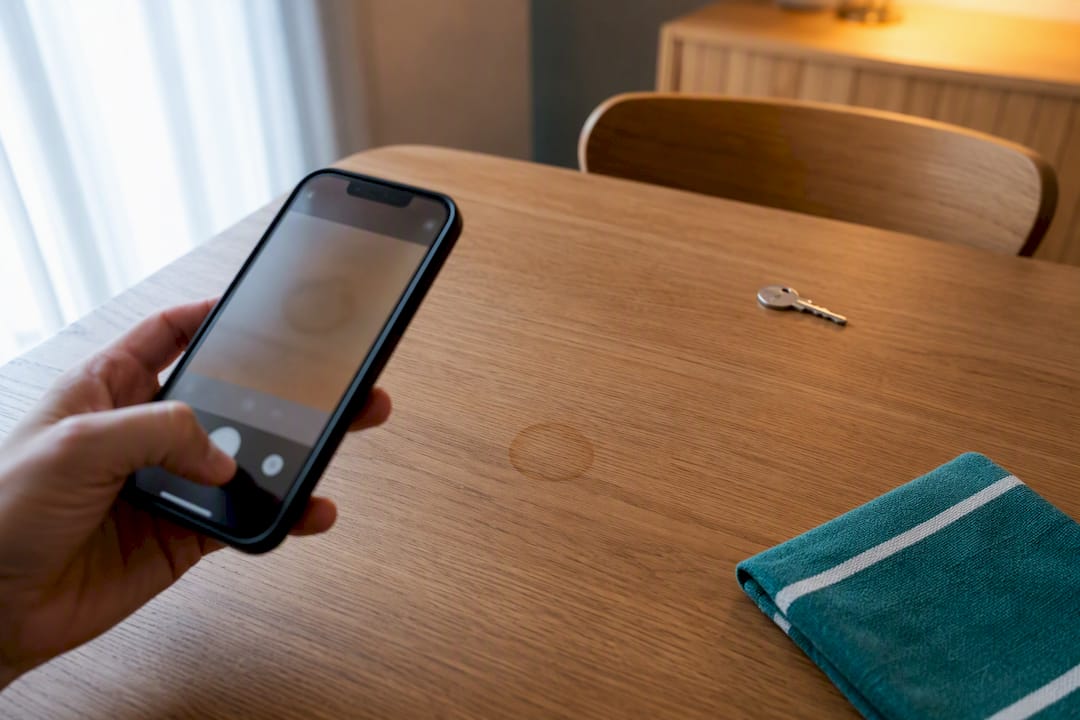
Cleaning security and documentation, in short-term rentals, means an operational control system: standardised checklists, timestamped photo proof, and assignment procedures that confirm a clean was completed correctly and is documented in the event of a dispute. Three levers make the difference: automated scheduling, systematic photo proof, and safety checks for cleaners. An application like Cleanclac brings all three levers together in a single workflow.
In brief:
- Automated scheduling and systematic photo proof are essential to guarantee cleaning compliance in short-term rentals.
- Checklists must target high-risk points such as hobs and grout, and follow a standardised photo procedure with timestamping and geolocation.
- Automating the schedule means syncing with your PMS, setting assignment rules based on geography and availability, and managing back-to-back turnovers to avoid delays.
- Full traceability, with timestamped photo proof and automated analysis, is essential for responding quickly to complaints and maintaining owner trust.
- On-site cleaner safety relies on appropriate equipment, immediate incident reporting, and GPS tracking to monitor every job in real time.
Table of contents
- What checklist guarantees a compliant clean?
- How do you automate scheduling without disrupting service?
- How do you produce proof that protects the manager?
- What procedures protect cleaners in the field?
- How do you track supplies without losing control of costs?
- How do you roll out these controls step by step?
- What types of insurance cover cleaning activity?
- What legal obligations apply to cleaners?
- How do you choose the right insurance for your cleaning activity?
- How is a cleaning-related claim handled?
- What preventive measures actually reduce risk?
- What field experience reveals about cleaning safety
- Cleanclac structures your controls without multiplying tools
- Sources
- Frequently asked questions
What checklist guarantees a compliant clean?
A serious cleaning checklist goes well beyond "vacuum and change the linen." It must isolate the real friction points: the ones that generate negative reviews or disputes with the owner.
Room-by-room checks must target high-risk items: hobs, shower grout, bedding, visible hairs or stains on linen, and the working condition of equipment such as air conditioning, the Wi-Fi router, and smart locks. A generic checklist that overlooks these specific points protects no one.
The photo procedure must follow a fixed logic:
- A reference photo for each room, taken during the first validated clean, serving as the visual standard for every subsequent visit.
- Identical angles at every clean: front door, worktop, bathroom, made bed.
- Automatic timestamping and geolocation to prove when and where the clean took place.
- Before-and-after comparison when a guest reports an incident.
The acceptance threshold must be defined in advance. A blurry photo, a missing shot in the sequence, or a visible deviation from the reference triggers a specific action, not just a comment. Depending on the severity, that could mean sending the cleaner back, opening an incident ticket, or adjusting the contractor's invoice. Without a written rule, every manager improvises, and the inconsistency eventually costs money in guest reviews.
How do you automate scheduling without disrupting service?
Automating a cleaning schedule means turning a booking into an assigned job with no manual step in between. It starts with syncing your PMS or booking calendar with your cleaning management tool. As soon as an Airbnb, Booking.com, or Vrbo reservation is confirmed, the cleaning job must appear automatically in the schedule, with the correct checkout and check-in window.
Three elements make automation reliable:
- Calendar linking and exception handling. A last-minute cancellation or date change must reschedule the job automatically, with no double handling or missed update. Without this, turnover becomes a recurring source of errors.
- Assignment rules. Geographic area, cleaner availability, required skills such as linen management, pool, or spa, and language spoken must all drive automatic job assignment. Confirmation should come via a mobile acceptance action, not a passive notification.
- Back-to-back management. When a checkout and a check-in fall on the same day, the system must alert you early enough to bring in a second cleaner or tighten the turnover window.
Good automation combines PMS syncing, assignment rules, and completion proof in a single workflow, rather than three separate tools that never talk to each other.
Pro tip: Always have a contingency procedure for emergencies, including on-demand contractors available near you. A cleaner calling in sick the evening before a turnover must never delay a guest's arrival.
How do you produce proof that protects the manager?
Photo verification only has value if it can be used when a disagreement arises. A manager who receives a cleanliness complaint must be able to respond within minutes, with timestamped proof, rather than having to call the cleaner back three days later.
Roll it out gradually: requiring photo verification for the first twenty turnovers quickly aligns visual standards between managers and cleaners, before you ease the frequency of checks once the routine is established.
A useful monthly owner report contains:
- The number of cleans completed and their average duration per property.
- Compliance photos for each clean, sorted by date.
- Incidents reported, their resolution, and the associated cost.
- A breakdown of supplies consumed and their impact on invoicing.
Some solutions now include automated photo analysis to flag visual anomalies and prioritise human checks, cutting the time spent sorting through hundreds of compliant shots. Full traceability, with proof retained over several months, remains the decisive argument when an owner questions the quality of the service.
What procedures protect cleaners in the field?
Cleaner safety goes beyond equipment. It includes the ability to react when something goes wrong during a job, alone in an unfamiliar property.
Several platforms in the sector now include field safety features that have become standard: a one-gesture SOS button, GPS timestamping, and geolocated check-in and checkout for each job. Sharing location during the job lets a manager see in real time where each cleaner is, and escalate quickly if an alert is triggered without a response.
Best practices to formalise:
- Appropriate personal protective equipment: gloves, clearly labelled and unmixed products, non-slip footwear for wet floors.
- A one-tap reporting procedure for any incident, whether injury, damage, or suspicious behaviour in the building.
- Systematic documentation of the incident with a photo, timestamp, and short description, stored in the job history.
Pro tip: Train every cleaner to flag a concern before it becomes a problem. A forced door or a smell of gas warrants an immediate report, not an end-of-day note.
How do you track supplies without losing control of costs?
Stock tracking prevents two common problems: running out of supplies mid-season, and being unable to justify an invoice to an owner who thinks costs are too high.
A per-property inventory with automatic reorder thresholds limits unnecessary trips by cleaners and cleans delayed because a product is missing. Keeping supplies on-site rather than transporting them significantly reduces forgotten items and incidents caused by missing equipment.
- A product sheet for each item used, with a compatible alternative in case of supplier shortage.
- Tracking of losses or theft per property to identify abnormal discrepancies.
- A cost report integrated into accounting, so every euro billed to the owner can be justified.
This level of traceability turns an opaque billing line into a trust-building argument with the owner.
How do you roll out these controls step by step?
Moving from manual management to a structured system does not happen overnight. A gradual rollout limits errors and allows you to refine standards before applying them across the board.
- Preparation. Define your standards room by room, take reference photos for each property, and set up the connection with your PMS or booking calendar.
- 30-day pilot. Test on one to three properties only. Review every photo proof daily during this phase to correct deviations before they become habits.
- Technical validation. Test the application on real mobile devices, with and without Wi-Fi. App stability issues can block a job checkout mid-turnover and cost you a critical time slot.
- Progressive rollout. Once the pilot is validated, automate assignment rules, activate full owner reporting, and monitor key metrics: photo compliance rate, average time between checkout and check-in, and number of incidents per month.
This gradual approach avoids the classic pitfall: deploying a tool across fifty properties at once, only to discover mid-season that standards were never clearly defined.
What types of insurance cover cleaning activity?
Two types of cover form the backbone of insurance for a short-term rental cleaning operation. The first, professional liability insurance, covers damage caused to a third party during the job: an accidental breakage, a leak caused while cleaning, an item broken at the owner's property. This is the cover most frequently required by property management platforms and agencies.
The second, often associated with the owner's own home multi-risk insurance, covers the property against fire, water damage, or theft, regardless of any cleaning work. This policy protects the property itself, not the activity of the contractor working in it.
A cleaning company that employs several cleaners generally needs to add cover for employees working away from a fixed base, separate from the company's own liability policy. Some contracts include personal accident cover for cleaners, which handles the consequences of an accident occurring during work, even in the absence of a third-party fault.
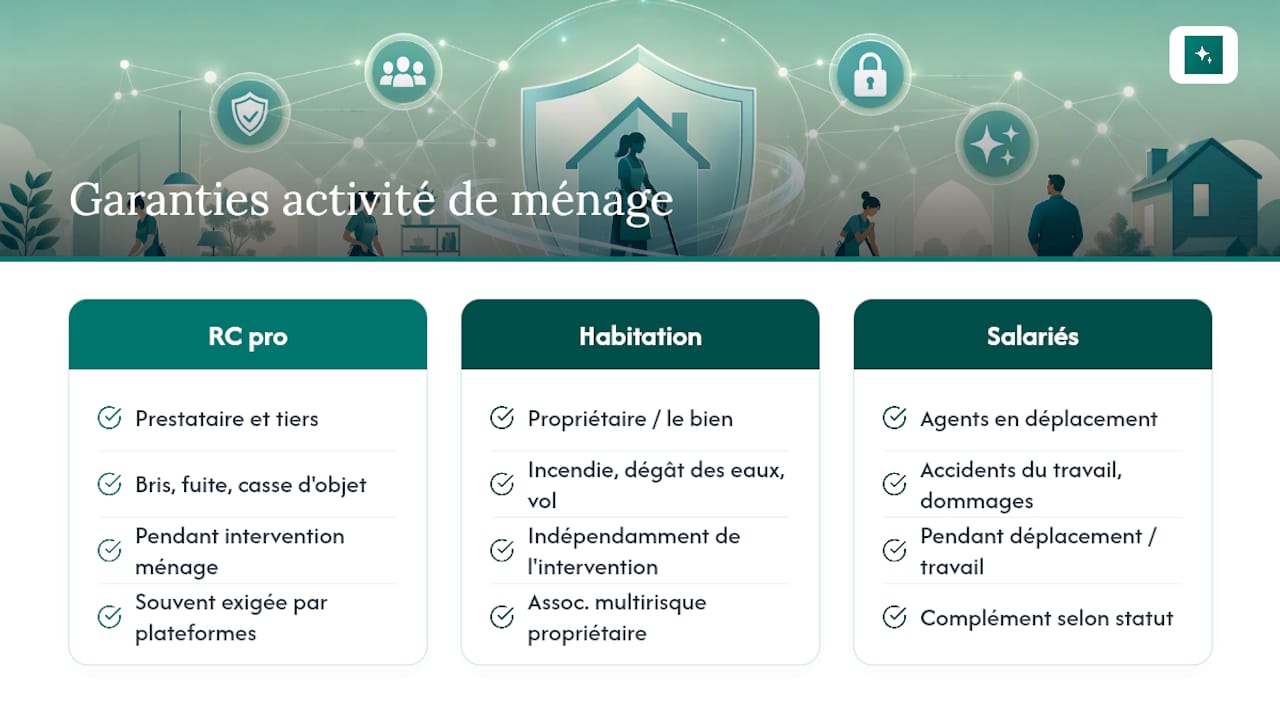
The right choice depends on legal status. A sole trader does not have the same obligations as a company with employees. In all cases, the cover must match the actual volume of properties managed, not a generic package renewed year after year without review.
What legal obligations apply to cleaners?
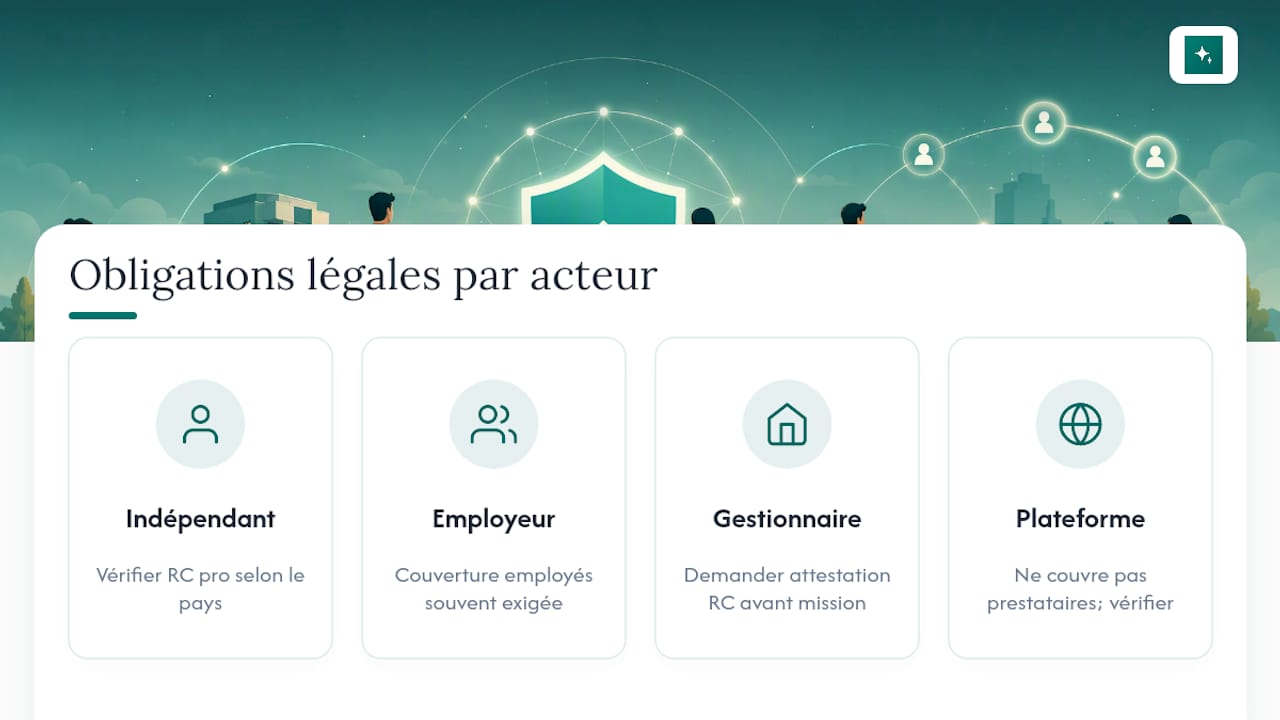
Insurance obligations vary significantly depending on legal status and country of operation, making any universal generalisation impossible. A self-employed cleaner must check with the competent authorities in their country whether professional liability insurance is compulsory for their activity, or merely recommended.
In several jurisdictions, a company employing staff is required to take out cover for employees on assignment, separate from each cleaner's personal insurance. This obligation depends not only on the sector, but also on the legal structure of the company itself.
A property manager using an external contractor should routinely request an up-to-date professional liability certificate before any job begins. This protects the manager if the contractor causes damage at the owner's property, and avoids a legal grey area that is difficult to untangle after a claim.
Platforms that connect cleaning contractors do not generally provide insurance cover for each individual cleaner. Their terms of use typically state that responsibility for cover falls on the contractor or their employer. Checking this point before signing a contract with a new contractor is a step too many managers skip, pressed for time or overly trusting.
How do you choose the right insurance for your cleaning activity?
Choosing insurance starts with the volume of properties managed and the structure of the team. A manager overseeing three rentals with a single cleaner does not have the same needs as a cleaning company employing fifteen cleaners across several cities.
A few practical benchmarks help when comparing policies:
First, check the cover limit in the professional liability contract. A limit that is too low may prove insufficient if significant damage occurs in a high-end property. Then examine the exclusions listed in the general conditions carefully, as some contracts exclude damage caused by gross negligence or the use of non-approved products.
Cover must also match the type of job being carried out. A standard clean does not carry the same risks as a job that includes pool or hot tub maintenance, where the risk of water damage or personal injury increases considerably.
Finally, compare the premium cost against the number of properties covered and the frequency of cleans. A fixed annual premium can become disadvantageous if the business grows quickly, while a flexible contract tracks the reality of an expanding operation more closely. Getting several quotes from insurers specialising in domestic services or professional cleaning remains the best way to avoid cover that is poorly calibrated for your actual volume of activity.
How is a cleaning-related claim handled?
A claim arising from a cleaning job generally follows a process of several stages, always beginning with notification. The cleaner or manager must report the incident to the insurer within the timeframe specified in the contract, often limited to a few working days after the damage is discovered.
Documentation is the decisive element of the file. A timestamped photo of the damage, alongside the reference photo taken before the clean, makes it possible to distinguish damage caused during the clean from pre-existing damage the owner might try to attribute to the contractor. Without this proof, both the insurer and the manager are left without a leg to stand on when the facts are disputed.
The insurer then assesses liability based on the cover taken out and the contract exclusions. Damage caused by a maintenance fault in the property itself, unrelated to the clean, generally falls under the owner's home multi-risk insurance rather than the cleaner's professional liability.
The time to settlement varies with the complexity of the file and how promptly supporting documents are supplied. A complete file, with photo proof, a dated incident report, and a written statement from the cleaner, is almost always processed faster than one based solely on late verbal declarations.
What preventive measures actually reduce risk?
Prevention always costs less than managing a claim after the fact. A few simple measures significantly reduce the frequency of incidents, whether material or physical.
Training every cleaner in the correct use of chemical products, with a safety data sheet displayed or accessible on their phone, prevents mixing errors that cause toxic fumes. Standardising checklists and reference photos per property greatly reduces incidents caused by unfamiliar equipment being handled incorrectly.
Systematically checking the condition of electrical equipment before starting work, and reporting any faulty socket or exposed wire before plugging anything in, protects both the cleaner and the property. Logging every anomaly spotted, however minor, in the property history makes it possible to anticipate a failure rather than discover it mid-job.
Finally, keeping each contractor's insurance certificates up to date and verifying their validity at regular intervals rather than once at onboarding prevents an expired policy from being discovered at the very moment it was needed.
What field experience reveals about cleaning safety
The link between documented proof and fewer disputes is no coincidence. A manager who can produce a timestamped photo in response to a complaint shuts the conversation down in minutes, whereas the absence of proof turns every disagreement into a stand-off.
This effect flows directly through to guest ratings and owner retention. Owners rarely renew a management mandate after a poorly documented claim. Managers who structure their checks with a tool like Cleanclac turn an administrative constraint into a commercial argument with their owners.
, Jonathan
Cleanclac structures your controls without multiplying tools
Cleanclac is the alternative to manual management by spreadsheets and scattered messages, for managers who want to industrialise their cleaning controls without technical complexity. Every cleaner has their own mobile access, scheduling triggers automatically with each Airbnb, Booking.com, or Vrbo reservation, and every job ends with timestamped photo proof available in the event of a dispute.
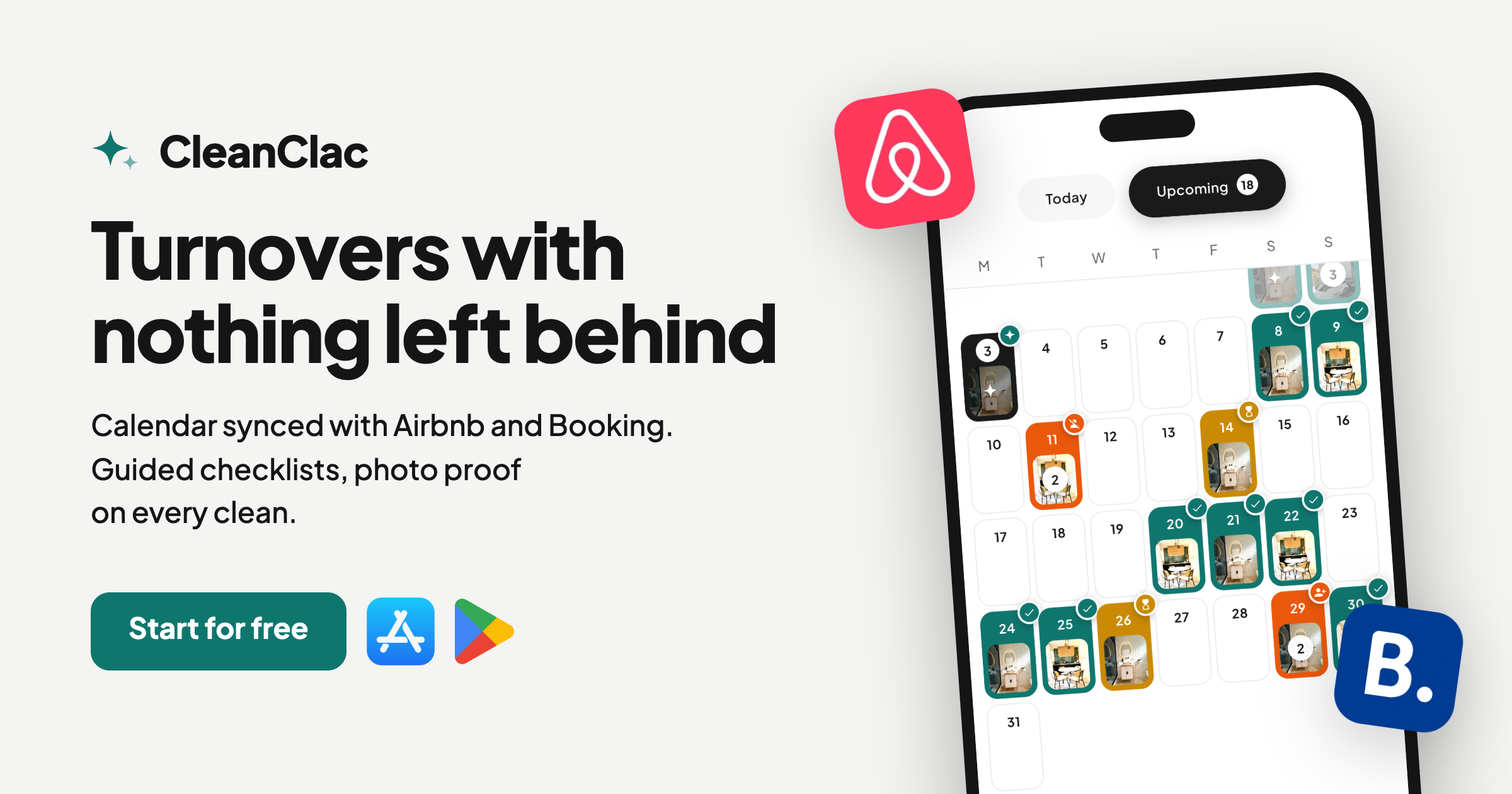
The platform also centralises per-property stock tracking and generates owner reports with photos, incidents, and detailed costs. For a cleaning company managing several teams, automatic assignment rules and individual mobile access remove much of the usual manual coordination. Try cleaning management with Cleanclac today and start a trial on your first properties to validate your standards before rolling them out.
Sources
These resources expand on the practices discussed in this article:
- Top Operations & Cleaning Software for Vacation Rentals in 2026 | STR Tech Report
- How to Automate Cleaning Schedules for Short-Term Rentals (2026 Guide)
- Airbnb Cleaning Automation: How to Simplify Turnovers at Your Short-Term Rental
Frequently asked questions
What is timestamped photo proof in cleaning?
It is a photograph taken at a precise moment, with the date and time automatically recorded, that confirms the condition of a room after a cleaner has completed their work.
Is public liability insurance compulsory for a cleaner?
It depends on the legal status and the country of operation: check with the competent authorities in your country whether this cover is required for your specific activity.
How does Cleanclac help document a clean in the event of a dispute?
Cleanclac generates timestamped photo proof for every job, accessible in owner reports, making it possible to respond quickly to a cleanliness complaint.
What is the difference between home multi-risk insurance and professional liability insurance?
Home multi-risk insurance covers the property itself against fire, water damage, or theft, while professional liability insurance covers damage caused to a third party by the cleaner during the job.
How long should you pilot a new cleaning procedure before rolling it out?
A 30-day pilot on one to three properties, with daily review of photo proof, is generally enough to validate standards before extending them across the entire portfolio.


